

Lamination and spot UV
Cover finishes change how a brochure or catalogue feels in hand and how well it stands up to handling. We apply matt or gloss lamination, with optional spot UV highlights, on covers printed on our sheet-fed offset presses in Epping.
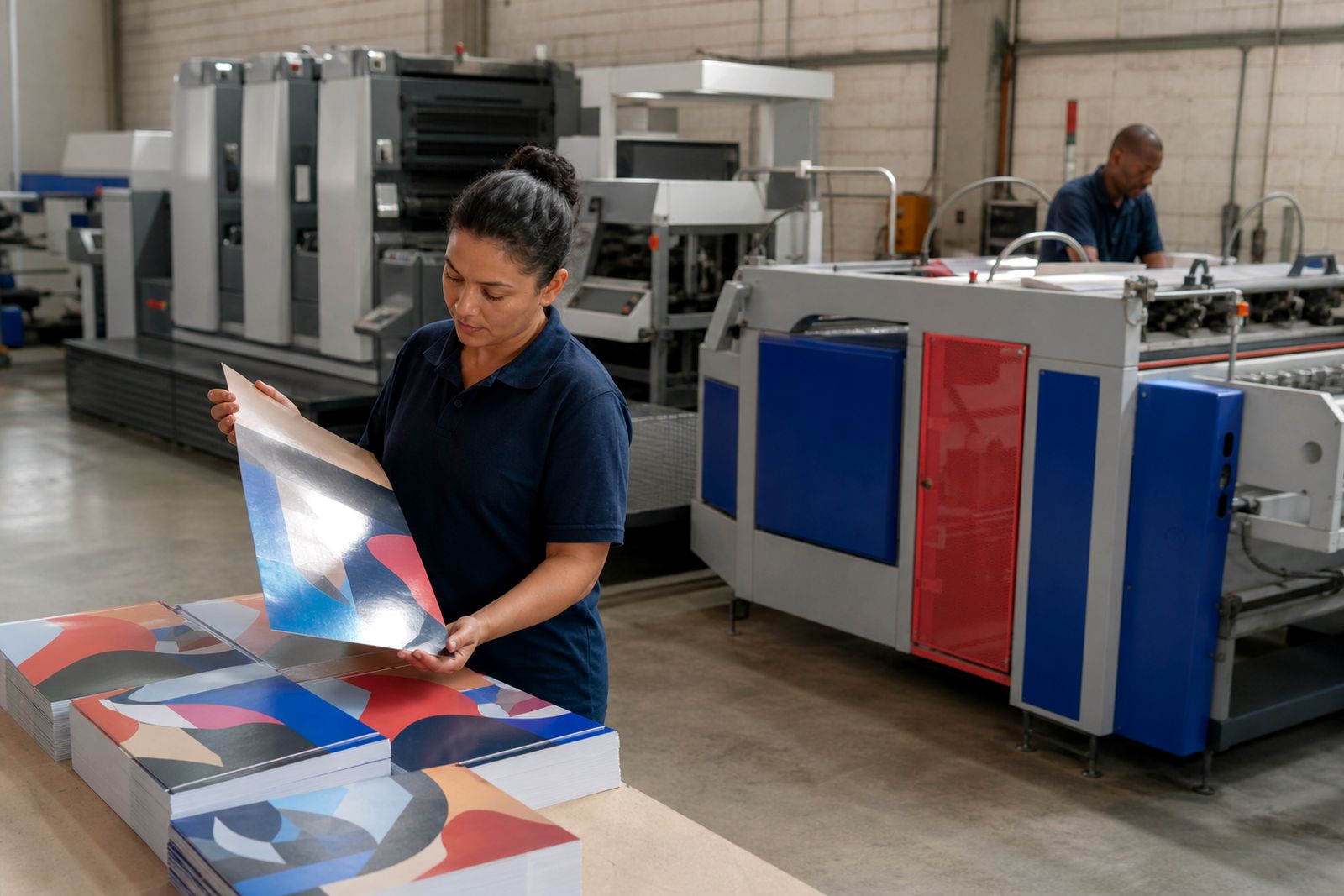
Cover finishes that suit printed sales material
Lamination and spot UV are finishing options for brochure and catalogue covers rather than inside text pages in most jobs. Lamination adds a clear film over the printed cover to improve scuff resistance and give either a matt or gloss look. Spot UV is a high-shine coating applied only to selected areas, usually over logos, titles, product shots or pattern details, to create contrast against the printed sheet.
These finishes are commonly used on company brochures, school prospectuses, product catalogues, church conference booklets and NGO campaign material where the cover must hold up through handling, packing and courier delivery. In Cape Town's coastal conditions a laminated cover also helps with surface marking during transport and storage, especially on darker colours.
- Matt lamination for a flatter, softer finish with reduced glare.
- Gloss lamination for stronger shine and extra colour pop.
- Spot UV over specific artwork elements on the cover.
- Front cover only or both outer cover panels, depending on the job.
- Finishing matched to saddle stitched or perfect bound work.
What is included in this service
When lamination and spot UV are part of your order, we include the print planning needed to make those finishes work properly on press and in finishing. That starts with checking the cover artwork, confirming where the coating must sit, and making sure the chosen binding method will not interfere with the effect near folds, spines or trim edges.
Your order can include cover printing, lamination, spot UV preparation, proofing, trimming and the final bindery step. For brochures this may be folding only, or folding with stitching. For catalogues it may be saddle stitching or perfect binding. We courier completed work to every province from Epping.
- Artwork check for lamination and spot UV suitability.
- Advice on matt versus gloss for the type of publication.
- Proof before print so cover layout and key text can be checked.
- Registration planning for the spot UV mask.
- Finishing after printing and before dispatch.
How the job moves from quote to finished covers
The process starts when you send your brochure or catalogue specifications through our contact form. We need the finished size, page count, binding style, quantity range, paper choice and whether you want matt lamination, gloss lamination, spot UV, or a combination on the cover. If the inside pages differ from the cover stock, include that as well.
Once the specification is clear, you send the artwork files for checking. The cover is reviewed for bleed, trim, spine setup where needed, image quality and the separate spot UV mask if that finish is requested. A proof is issued before print so the layout, page order and visible content can be approved. Spot UV placement is checked carefully at this stage because it must align with the printed image on the final sheet.
After approval, the covers and text pages are printed on sheet-fed offset presses. The covers then move to lamination. If spot UV is part of the order, that coating is applied after the relevant preparation step and curing. The printed sections are folded, stitched or bound, then trimmed and packed for courier dispatch. On very dark solid covers, minor scuffing can still happen during handling if the piece moves loose in a carton so packing matters as much as finishing.
Artwork and file preparation from your side
For lamination and spot UV to register properly, the cover artwork must be built cleanly and supplied at final size with bleed. Spot UV should not be guessed from a screenshot or marked loosely in comments. It needs its own clearly prepared mask layer or separate file, using solid black only where the gloss coating must appear. Fine hairlines, tiny reversed text and effects that sit too close to folds can produce disappointing results.
- Supply print-ready PDF files at final trim size with bleed.
- Keep important text and logos safely inside the trim area.
- Provide a separate spot UV mask for selective gloss areas.
- Use high-resolution images and convert colours correctly for print.
- Allow for the spine width on perfect bound catalogues.
- Mark whether spot UV applies to the front only or front and back cover.
If your publication has large areas of deep black, rich colour builds or photographs that run over folds, mention that upfront. Some finishes show fingerprints, fold stress or surface marks more readily than others and it is better to plan that before the sheets go to print.
How costing is worked out
Pricing for lamination and spot UV is based on the overall print specification rather than a single add-on fee. The main factors are the finished size, number of covers or sections, chosen cover stock, print quantity, whether the job is portrait or landscape, and the binding method. Spot UV adds preparation and finishing steps, so the coating area and how the mask is applied also affect cost.
A short brochure with a laminated cover is costed differently from a thicker perfect bound catalogue with a separate spot UV treatment on the front. Cover size, sheet layout and the number of finishing passes all matter. If a job includes special folds, heavy coverage on the cover, or a spine that needs careful setup, that forms part of the estimate as well. We work from the exact specification submitted rather than broad package rates.
Handling after delivery
Laminated and spot UV covers are made for regular handling, but they still benefit from sensible storage. Keep cartons dry, level and out of direct sun, especially if the print run will be used over a long campaign period. Avoid leaving stacks in hot vehicles for extended periods because heat can affect the feel of the laminate and the flatness of the finished piece.
When unpacking, lift smaller bundles rather than dragging copies across each other. Spot UV areas are glossy by design and will show surface scratches if rubbed hard against rough packing material. For catalogues going to reps, schools or church offices, it helps to keep partial boxes closed until needed so dust and moisture stay off the covers.
If you are planning a brochure or catalogue with these finishes, send the cover specification and file details through our contact form and we will price it against the full print job.
What our Brochure Printing customers say
Verified Google reviews
Questions we get asked
Can spot UV be applied without lamination?
It can be, but many cover jobs use spot UV together with lamination for better surface protection and stronger contrast. The best route depends on the cover stock and the look you want.
Does matt lamination make colours look dull?
Matt lamination softens surface shine, so the result looks calmer than gloss. It does not remove the printed image, but the visual effect is more muted and less reflective.
Can spot UV go over small text or thin lines?
Very fine details are risky because selective coating must register accurately on the printed sheet. Larger shapes, titles and solid graphic elements usually give a cleaner result.
Also worth a look
Tell us about the job
Send sizes, materials and where you are through our contact form, and we will come back with the practical options.
Open the contact form