

Catalogue printing
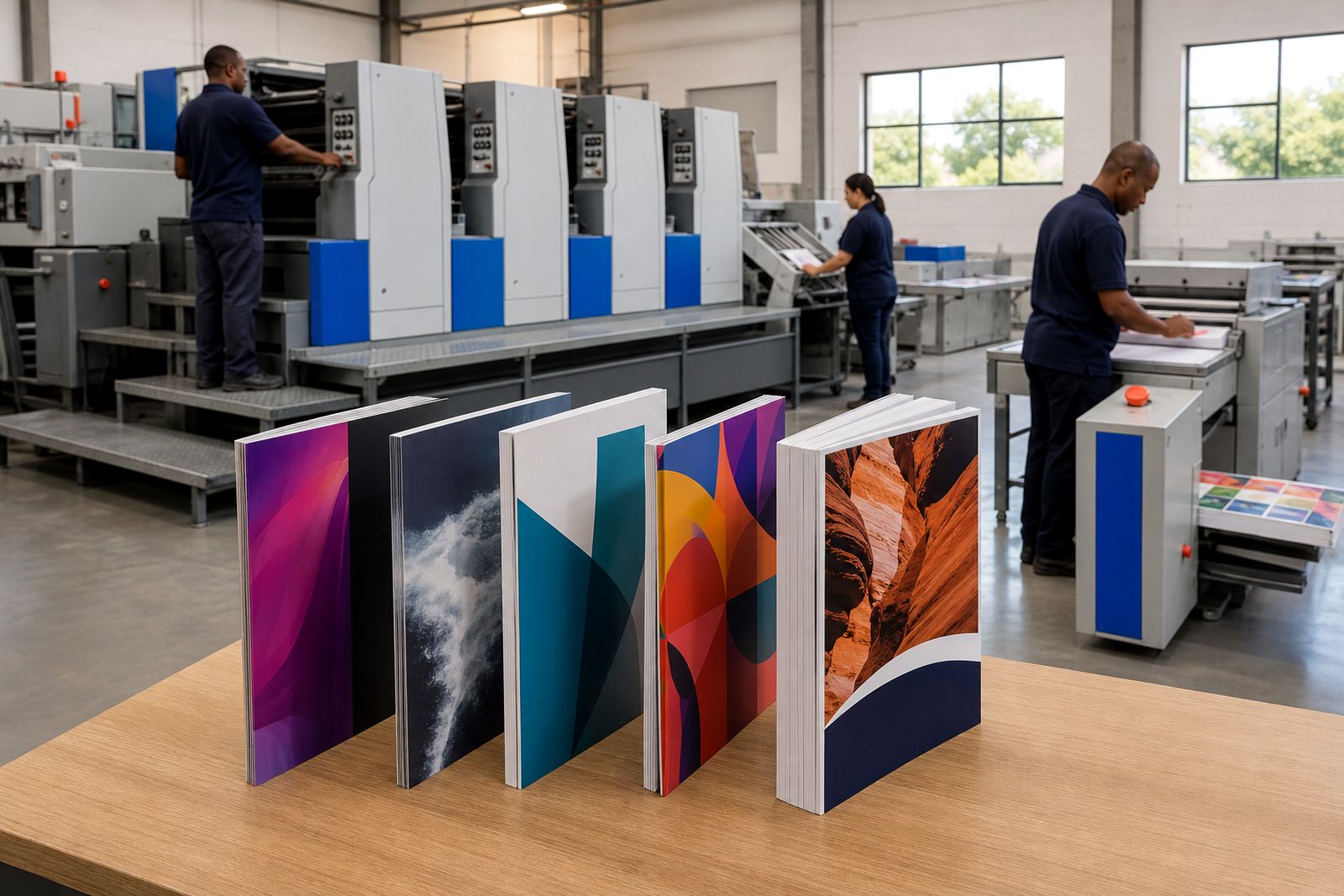
Catalogues need enough structure to carry information clearly, hold together in use and arrive looking consistent from copy to copy. We print product catalogues, booklets and programmes on sheet-fed offset presses in Epping, with proofs, finishing and courier delivery across South Africa.
Catalogue work that suits longer content
When a brochure runs past a few panels and starts carrying ranges, specifications, pricing tables or event information, a catalogue format makes more sense. This section covers stitched and perfect bound work, along with shorter booklet formats, so you can match the finish to the page count, the way the piece will be handled and the impression it needs to give on arrival.
Most jobs in this category are used for product lists, wholesale ranges, school prospectus packs, church conference programmes and NGO reporting. We print from supplied artwork, check files before press and issue a proof before production moves ahead, which helps catch page order, image placement and obvious layout problems before paper is committed.
Choosing between saddle stitching and perfect binding
The main choice is usually between saddle stitching and perfect binding. Both work well for catalogues, but they suit different page counts and different kinds of use.
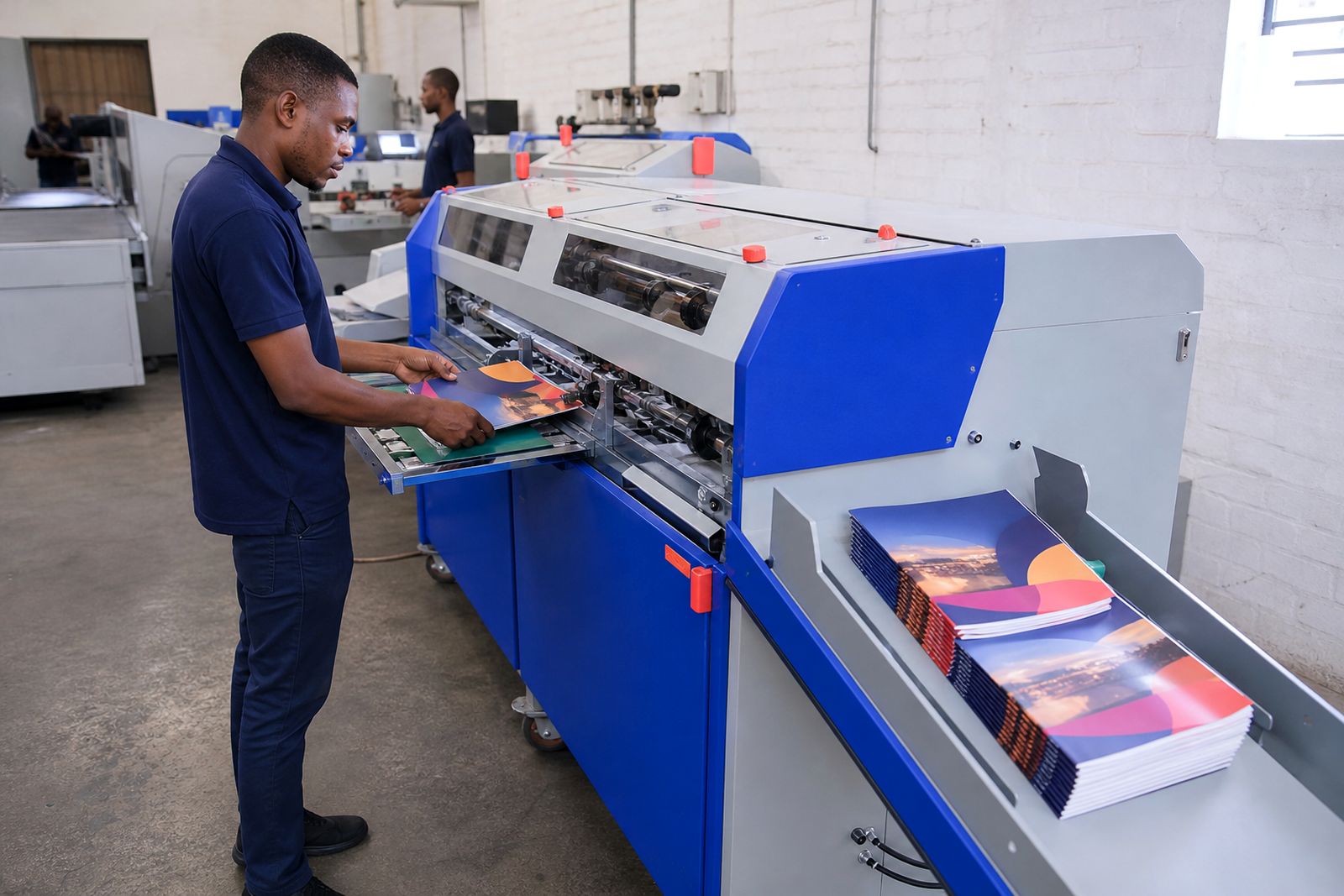
- Saddle stitched catalogues are folded, gathered and wire stitched through the spine. They sit neatly for shorter runs of content and open well for browsing.
- Perfect bound catalogues have a square spine with the pages glued into a wrap cover. They suit thicker books and give more room for spine text on shelves or in sample libraries.
- If your piece needs to feel light, easy to hand out and simple to post, stitching is often the better route.
- If it needs a more book-like presence for a sales team or showroom counter, perfect binding usually reads better.
Page extent matters here, but handling matters just as much. A stitched catalogue passed around at an expo behaves differently from a bound product book used by a rep in the field every week, and that difference is worth planning for early.
When a booklet is the better fit
Not every multi-page print job needs to present itself as a full catalogue. Some projects sit better as booklets or programmes, especially where the content is event-led, instructional or seasonal. That could be a school ceremony programme, a course booklet, a church event handout or an internal reference piece with sections and timetables.
Booklets keep the format practical when the information matters more than shelf presence. They are easier to carry in quantity, easier to distribute at venues and often easier to update for the next issue when dates, speakers or product lines shift a bit.
- Use a booklet format for timetables, schedules, programmes and compact reference material.
- Use a catalogue format for product ranges, service lineups and printed sales support.
- Choose the cover finish around handling conditions, especially where coastal humidity and frequent transport can mark unprotected covers.
Paper, cover feel and finishing choices
Inside pages and covers do different jobs. Inner pages need legibility, good image reproduction and manageable bulk. Covers need more stiffness and, in many cases, extra protection. We can guide the print build around coated or uncoated stocks, cover thickness and finishes that change how the piece feels in hand.
Lamination is often chosen for covers that will be handled repeatedly, while spot UV is used where selected artwork areas need contrast and a stronger visual hit. For practical catalogues with a lot of handling, the finish should support the job rather than fight it. A glossy effect can look sharp on the right imagery, but a softer finish may read better for long tables, dense text and a more restrained corporate look.
A practical comparison before you submit artwork
If you are deciding between the main catalogue options, these points usually settle it quite quickly.
- Choose stitched if the publication is slimmer, needs to open easily and will be handed out in larger quantities.
- Choose perfect bound if the page count is heavier and the square spine adds value for storage, presentation or indexing.
- Choose a booklet route if the piece is temporary, event-based or mainly informational rather than sales-led.
- Choose a laminated cover where copies will travel widely by courier or move between branches and meetings.
- Choose uncoated text pages where note-taking, a softer reading surface or a less reflective finish matters.
It also helps to think about how the finished item will be packed. Carton weight, spine protection and corner rubbing can influence the best finish, particularly for deliveries moving from Cape Town to inland destinations.
How catalogue orders move through production
Orders are placed online through a straightforward specification and quote process. Once we have the size, page count, binding choice, quantity and finishing details, we review the supplied artwork, flag any obvious setup concerns and prepare a proof before print proceeds. That proof stage is where pagination, fold position, cover alignment and image placement are checked with care.
After approval, sheets are printed on sheet-fed offset presses, then moved into folding, gathering and either stitching or perfect binding. Finished work is packed for courier delivery to every province. If you are weighing up the best format for a product range or programme, send the details through our contact form and we can point you to the most suitable option in this section.
Explore the range
Saddle stitched catalogues
Neat stapled catalogues for ranges, reports and programmes, printed on sheet-fed offset presses and couriered across South Africa.
Read more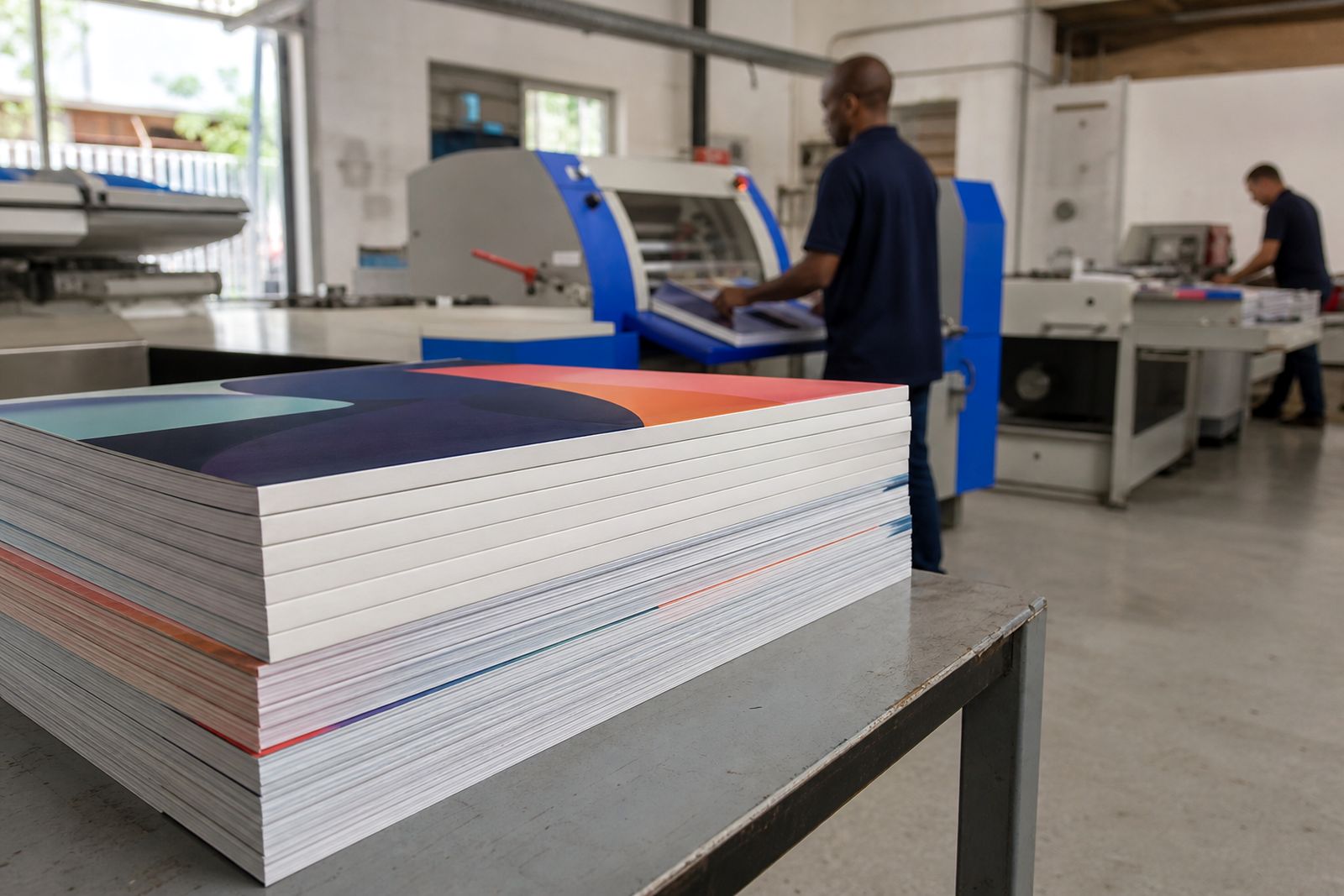
Perfect bound catalogues
Square-spine catalogues for bigger ranges, reference books and polished handout packs.
Read more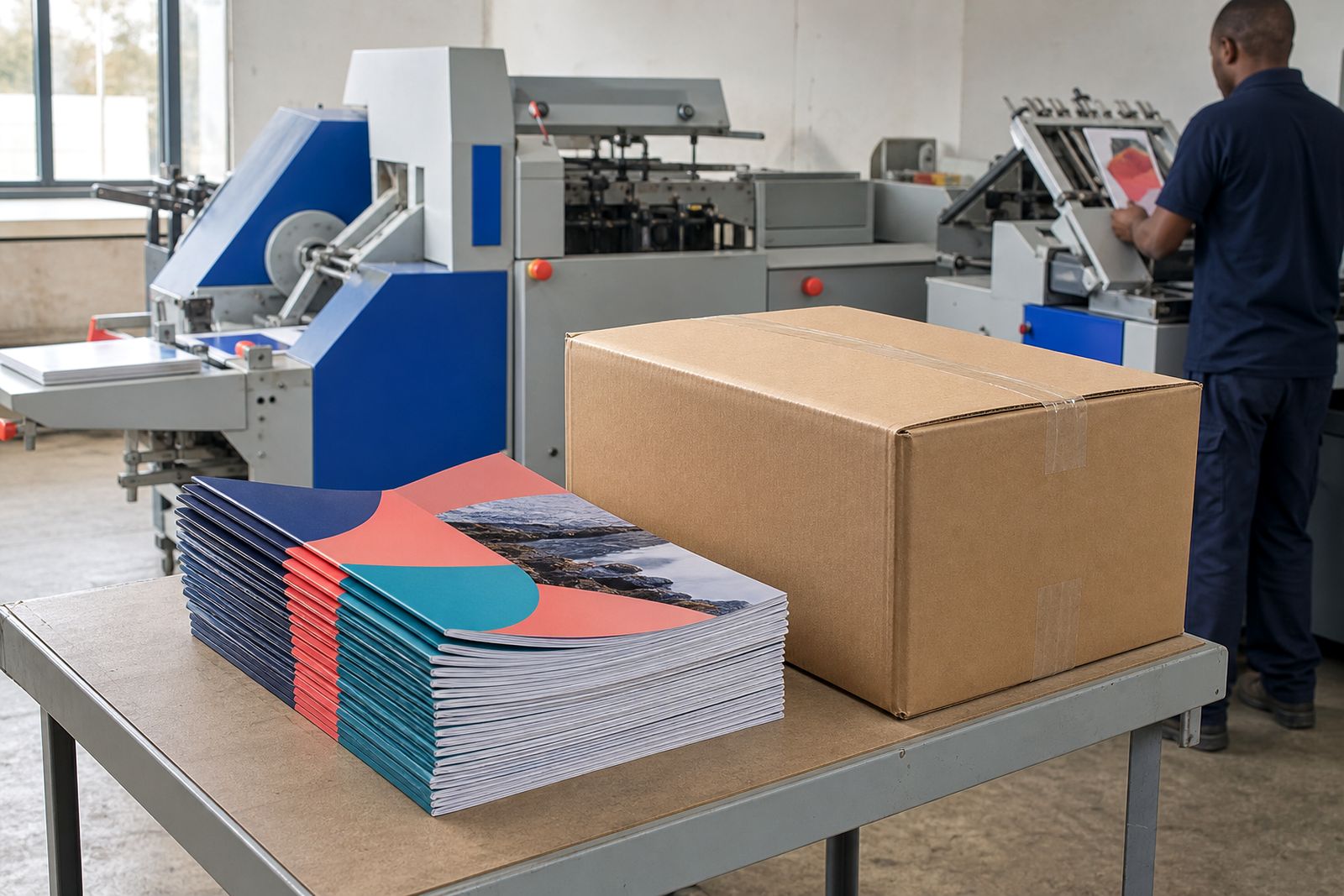
Booklets and programmes
Smaller offset-printed booklets and programmes for organised handouts, event running orders and short-form catalogued information.
Read moreWhat our Brochure Printing customers say
Verified Google reviews
Questions we get asked
What is the difference between a catalogue and a booklet?
A catalogue is usually built around products, services or structured ranges, while a booklet often carries programmes, schedules, guides or reference content. The print method can be similar, but the binding and cover choice may differ depending on handling and page count.
Can you help check page order and artwork before printing?
Yes. We review supplied files, check for obvious setup issues and provide a proof before print. This helps pick up pagination errors, missing pages, alignment concerns and other common problems before production.
Do you deliver catalogues outside Cape Town?
Yes. Production is based in Epping and finished catalogues, booklets and programmes are sent by courier to every province in South Africa.
Tell us about the job
Send sizes, materials and where you are through our contact form, and we will come back with the practical options.
Open the contact form