

Paper stocks and finishes
Paper choice changes how a brochure or catalogue feels in the hand and how colour sits on the sheet. This section covers the stock and finish options we print most often, with practical notes to help you match the job to the content.
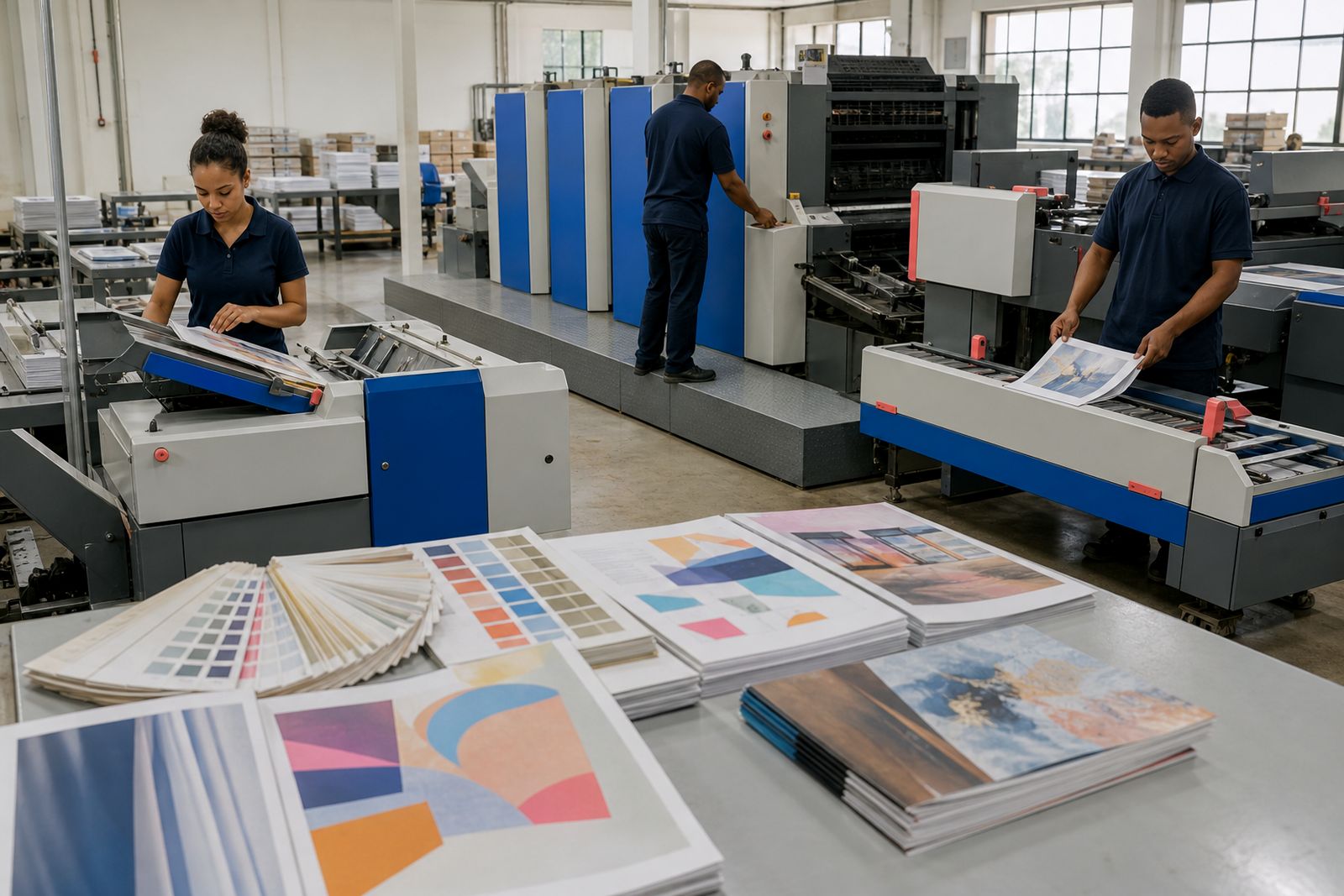
The stock sets the tone before anyone reads a word
For brochures, catalogues, booklets, flyers and leaflets, paper is not a small detail tagged onto the end of the job. It affects colour strength, readability, stiffness, postal handling and the way a piece holds up after a week in bags, cars and reception areas. A property brochure handed out at viewings needs a different feel from a school programme or a product catalogue that sales staff carry from meeting to meeting.
Our sheet-fed offset range covers gloss, matt and uncoated stocks for inside pages and covers, with finishing options added where the job needs extra protection or a more polished cover. If you are ordering online and weighing up choices, it helps to start with the purpose of the piece first, then match the stock to that use rather than chasing a paper name on its own.
Gloss, matt and uncoated in plain terms
These three families of stock each behave differently on press and in the hand. None is the right answer for every job, and a smart choice often comes down to the balance between image impact, easy reading and the tone you want the printed piece to carry.
- Gloss stock gives stronger shine and punchier images. It suits photo-led brochures, promotional leaflets and catalogues where product images need more snap.
- Matt stock softens glare and reads more calmly under office lights or near shopfront windows. It is often chosen for corporate brochures, reports and premium catalogues.
- Uncoated stock has a natural paper feel with less surface sheen. It works well for programmes, booklets, inserts and pieces where writing on the sheet may matter.
- On uncoated papers, colours tend to look more subdued than on coated sheets, which can be exactly the right look for some organisations.
If the job includes fine text, tables or a lot of editorial copy, matt or uncoated pages can be easier to live with over a longer read. For image-heavy work, gloss often carries photography better, though the choice still depends on the mood of the piece.
Inside pages and covers do not need to match
One of the most useful ways to build a brochure or catalogue is to separate the decision for inside pages from the decision for the cover. A lighter text stock inside keeps page turns comfortable and avoids a block that feels too thick, while a firmer cover stock adds structure. That contrast can make the finished piece feel neater and more considered even before any lamination is added.
A stitched booklet, for example, may work well with matt inner pages and a heavier gloss or matt cover. A perfect bound catalogue often benefits from a cover with more stiffness so the spine sits cleanly. For leaflets and folded brochures, the sheet has to fold neatly without feeling flimsy, which is why the fold style and panel count should be considered at the same time as the stock choice.
A practical way to compare options
When clients in Cape Town or further afield send a brief through our contact form, these are usually the questions that narrow the stock choice quickly. They are more useful than chasing a finish because it sounds premium.
- Will the piece be read once at an event, or handled for weeks by a sales team?
- Is the content mainly photography, mainly text, or a fairly even split?
- Will people write on it, stamp it or file it in a folder?
- Does the job need a firm cover with lighter inner pages?
- Will folded panels need to open and close often without showing scuffing too early?
- Is the printed piece travelling by courier to another province where it may pass through several hands before use?
Those points help separate a short-run campaign handout from a catalogue meant for repeated use. It sounds obvious, but many paper decisions become easier once the handling pattern is clear.
Lamination and other finishing choices
Finishing is usually most useful on covers rather than every page. Lamination adds a thin protective layer that improves resistance to scuffing and finger marks, especially on darker solids and covers that will be handled often. For brochures moving around sales counters or packed into sample bags, that extra protection can make a visible difference.
- Gloss lamination adds shine and boosts contrast on covers with bright imagery.
- Matt lamination gives a flatter, more restrained surface and is often chosen for company profiles and catalogue covers.
- Spot UV is generally used as a highlight over selected elements on a laminated cover, such as a title or image area.
- Unlaminated covers can still work well where a softer paper feel is preferred, though they will mark more easily.
Finishing should fit the use of the piece, not fight it. A church programme, NGO booklet or school handout may not need a laminated cover at all, while a sales catalogue passed around weekly probably will.
Choosing well for South African distribution
Because we print in Epping and send work by courier to every province, paper choice also needs to respect the trip and the end use. A brochure handed out in a dry inland setting may age differently from one used close to the coast where humidity can curl lighter sheets if they are stored poorly. That does not mean overbuilding every job, but it does mean choosing stock with enough body for the format and the route.
Once your specification is in, we check the artwork, prepare a proof before print and make sure the stock and finish fit the binding or fold method selected. That applies whether the job is a simple leaflet, a saddle stitched booklet or a thicker perfect bound catalogue. If you are unsure which way to go, send the format, page count and intended use through our contact form and we can guide the stock decision from there.
What our Brochure Printing customers say
Verified Google reviews
Questions we get asked
Which paper works best for photo-heavy brochures?
Gloss stock is often the first option for brochures built around strong imagery because it gives photos more shine and contrast. Matt can also work very well if you want a quieter, less reflective finish.
Should a catalogue cover be laminated?
If the catalogue will be handled often, packed for distribution or used by sales staff over time, lamination on the cover is usually worth considering. It helps reduce scuffing and finger marks, especially on darker designs.
Can inside pages and covers use different stocks?
Yes. Many brochures, catalogues and booklets are printed with lighter inside pages and a firmer cover stock. That combination often gives better handling and a cleaner finished feel.
Tell us about the job
Send sizes, materials and where you are through our contact form, and we will come back with the practical options.
Open the contact form