

How to order online
Ordering offset print online should feel clear from the first specification to the final proof approval. This page shows how we handle brochures, catalogues, booklets, flyers and leaflets from our Epping base for delivery across South Africa.
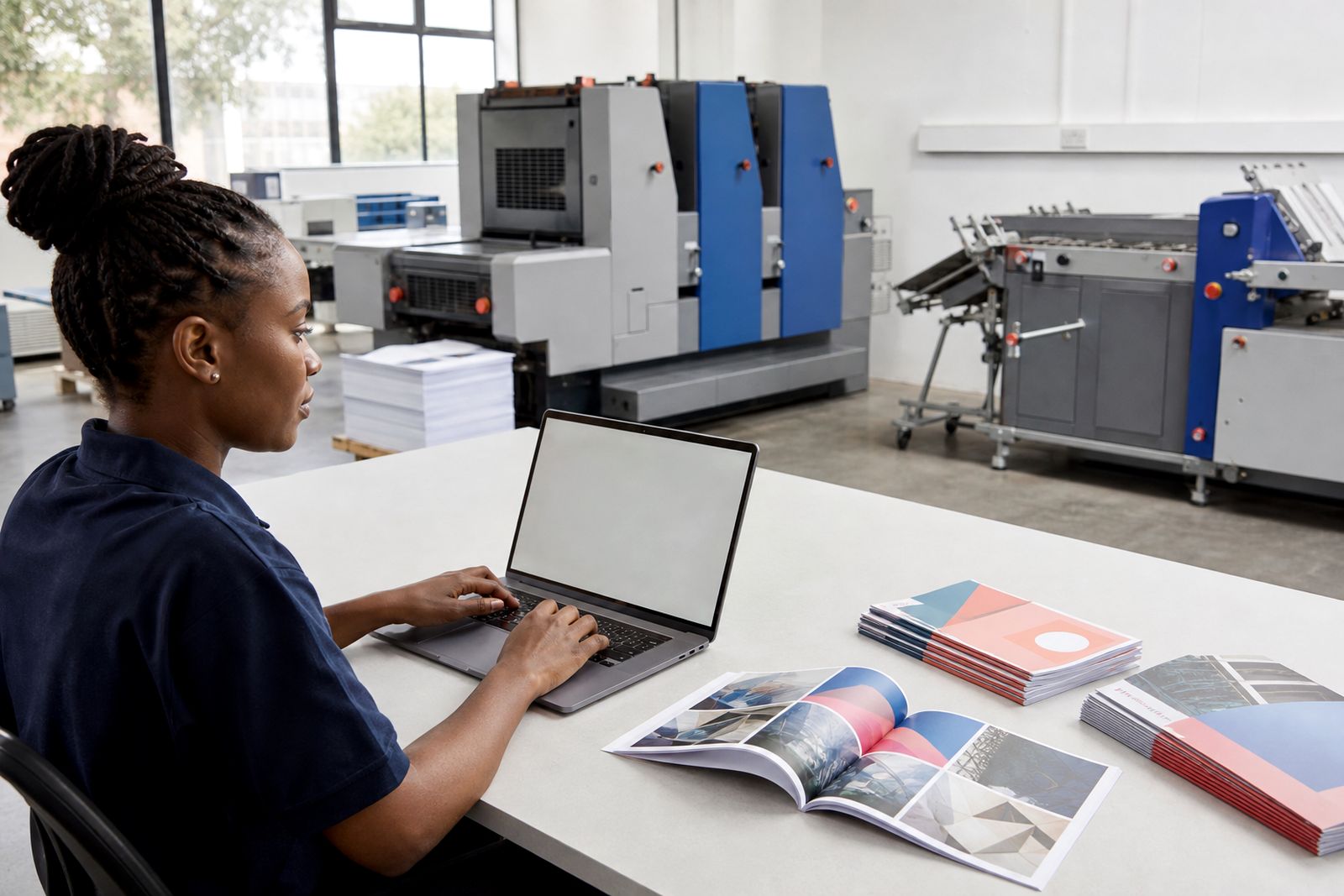
Start with the right print brief
The quickest way to get a solid quotation is to send the job as a print brief rather than a loose description. Tell us what you need printed, how it will be used, the finished size, the page count where relevant, and the finish you have in mind. We handle brochures, catalogues, booklets, flyers and leaflets on sheet-fed offset presses, with folding, saddle stitching or perfect binding where the format calls for it.
If you are still deciding between a folded brochure and a multi-page catalogue, we can price the likely options from the same brief so you can compare the format against the budget and mailing plan. Jobs move cleanly when the specification is complete and the artwork matches it, so a few extra details at the start save time later on.
- Product type, such as brochure, catalogue, booklet, flyer or leaflet
- Finished size and orientation
- Page count or panel count
- Printed sides, colour process and quantity range
- Paper preference, cover and text where applicable
- Finishing needed, including folding, stitching, binding or lamination
- Delivery town, province and any site access notes for courier
Artwork we need before print
Artwork should be supplied as a press-ready PDF with fonts embedded, images at suitable resolution and trim plus bleed set correctly. Offset work is less forgiving of casual file prep than office printing, so we check the file against the job specification before it goes to proof. That includes page size, page order, bleeds, safe margins and whether colour is built in CMYK rather than RGB.
Where a catalogue has many pages, it helps if the file is supplied as single pages in reading order unless a different imposition has been requested. Covers and text can be split into separate files when the stocks or finishing differ. If anything obvious is missing we flag it before the job goes forward, but the content, spelling and final sign-off remain with the client.
- PDF preferred for final artwork
- Bleed added on all trimmed edges
- Important text kept inside safe margins
- Images prepared for print, not screen use
- CMYK colour setup for predictable output
- Separate cover file where cover stock or finish differs
More detailed file notes are covered under our artwork setup and proof pages, but the main point is simple: send artwork that matches the size and structure of the printed piece you want made.
From quote to proof approval
Once we have the specification and artwork, we prepare the quotation around the actual manufacturing route for the job. A folded leaflet, a saddle stitched product booklet and a perfect bound catalogue all run differently through prepress, printing and finishing, so the quote reflects the real production path rather than a generic rate. After approval to proceed, we issue a proof for checking before print.
The proof stage matters. This is where you confirm page order, fold logic, copy changes, image placement and general appearance before plates are made. If a correction is needed, revised artwork can be supplied and a fresh proof issued. Nothing should go to press until the approved version is the one you are happy to sign off, even if the change feels small.
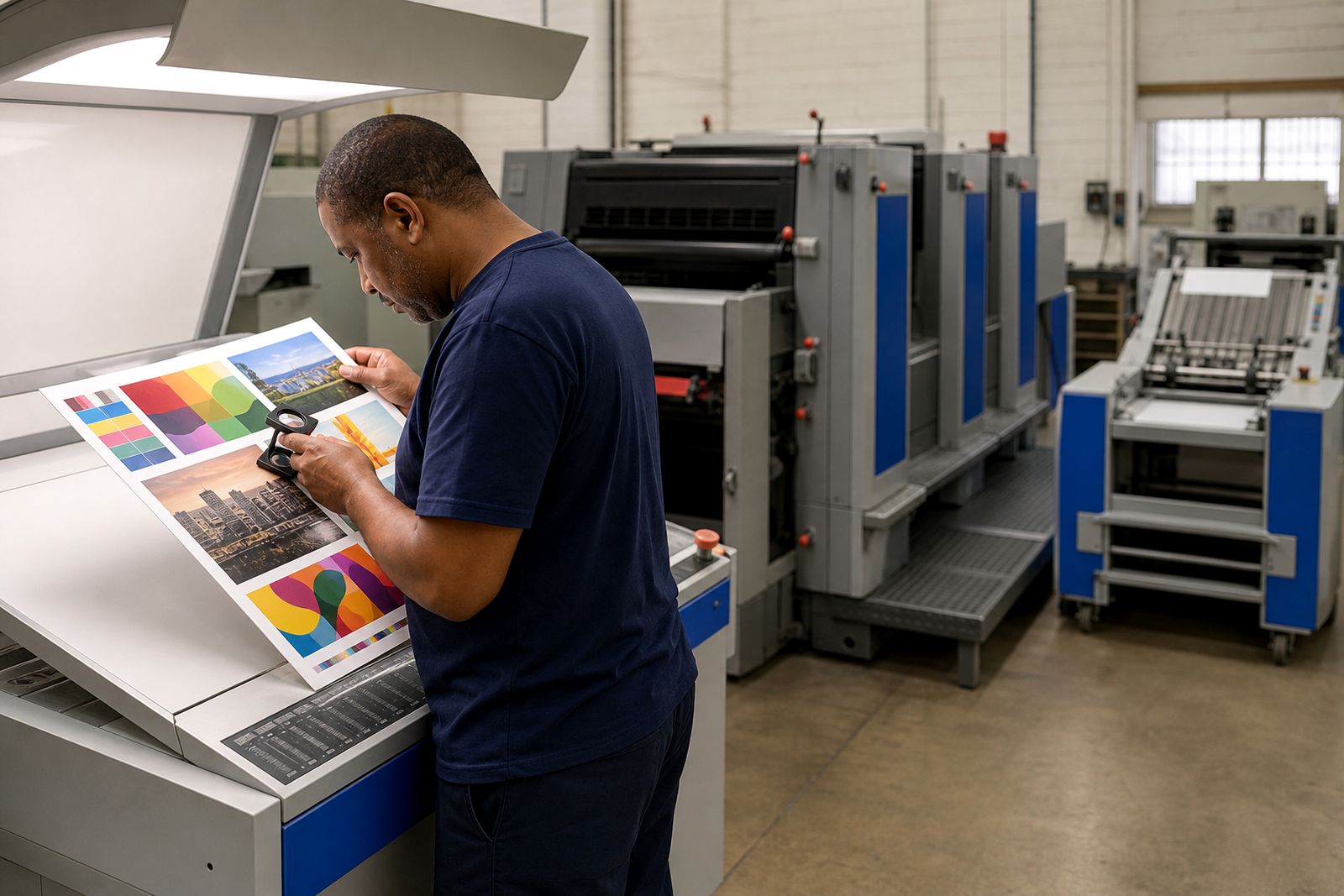
For colour-sensitive work we pay close attention to the supplied file and the chosen stock, because coated and uncoated sheets do not read colour in quite the same way. Small shifts can happen in normal print tolerances, especially on large solid areas, but the proofing step cuts out most avoidable surprises.
How pricing is worked out
Offset pricing is shaped by setup and run length, which is why the same brochure can price very differently at different quantities or with a different finish. We do not use a one-size-fits-all menu for every job. Instead, we build the quote from the format, number of pages or panels, chosen stock, colour process, finishing steps and the delivery destination.
Several cost drivers usually matter most. A self-cover booklet is manufactured differently from a booklet with a heavier cover. A tri-fold brochure needs creasing and folding set correctly for the stock. A perfect bound catalogue adds cover preparation, spine allowance and binding labour. Lamination, spot coating and courier routing also affect the final figure.
- Finished size and page count
- Quantity and how the run is imposed on press sheets
- Paper choice for inside pages and covers
- Colour throughout or mixed colour and mono sections
- Folding, stitching, perfect binding or other finishing
- Packing requirements and courier delivery to your province
If you are comparing options, send the alternatives in one brief. It is easier to price a few realistic routes together than to guess from seperate messages sent days apart.
Printing, finishing and courier delivery
After proof approval the job moves into production at our Epping operation. Sheets are printed, left to settle where needed, then passed into the finishing stage required for the format. Brochures may be folded, booklets may be saddle stitched, and catalogues may be perfect bound with the cover creased and wrapped to the text block. We pack for courier delivery to every province.
Courier delivery works best when the receiving point is clear about access, trading hours and contact details for goods inwards. Schools, churches, NGOs and larger offices often have site procedures that affect handover, so include those notes early. That helps avoid cartons circulating between reception, stores and admin with no one sure where the print must land.
We do not handle large-format banners, website work or brand design, so the process here stays focused on offset-printed paper items ordered online and manufactured to a stated specification.
Aftercare and repeat specifications
When the job arrives, check the outer cartons and the printed pieces against the approved specification. Count can vary slightly in the normal way for commercial print, but the format, finishing and version should match the signed-off proof. If there is a production issue, send clear photos and a summary through our contact form so the team can review it against the job record.
Many organisations print the same brochure or catalogue on a cycle with small artwork changes each time. Keeping a clean record of size, page count, stock choice and finishing makes future quoting easier and helps maintain consistency across editions. If you know a publication will be mailed, inserted into folders or displayed on shelving, mention that in the next brief because it can affect paper and binding choices more than people expect.
Good offset print starts with good information. A complete specification, correct artwork and careful proof approval make the online ordering process much smoother and keep production on track.
What our Brochure Printing customers say
Verified Google reviews
Questions we get asked
Can I ask for more than one version in the same enquiry?
Yes. If you are comparing sizes, folds, page counts or finishing options, include them in one brief so the alternatives can be priced against the same production assumptions.
Do you check my artwork before printing?
We check supplied files against the print specification for practical issues such as size, bleed, page order and basic colour setup before the proof stage.
Can you print a brochure and a matching catalogue together?
Yes, provided the brief clearly separates the specifications for each item. Matching sets are common for launches, school prospectus packs and product ranges.
Tell us about the job
Send sizes, materials and where you are through our contact form, and we will come back with the practical options.
Open the contact form