

Bi-fold and gate fold brochures
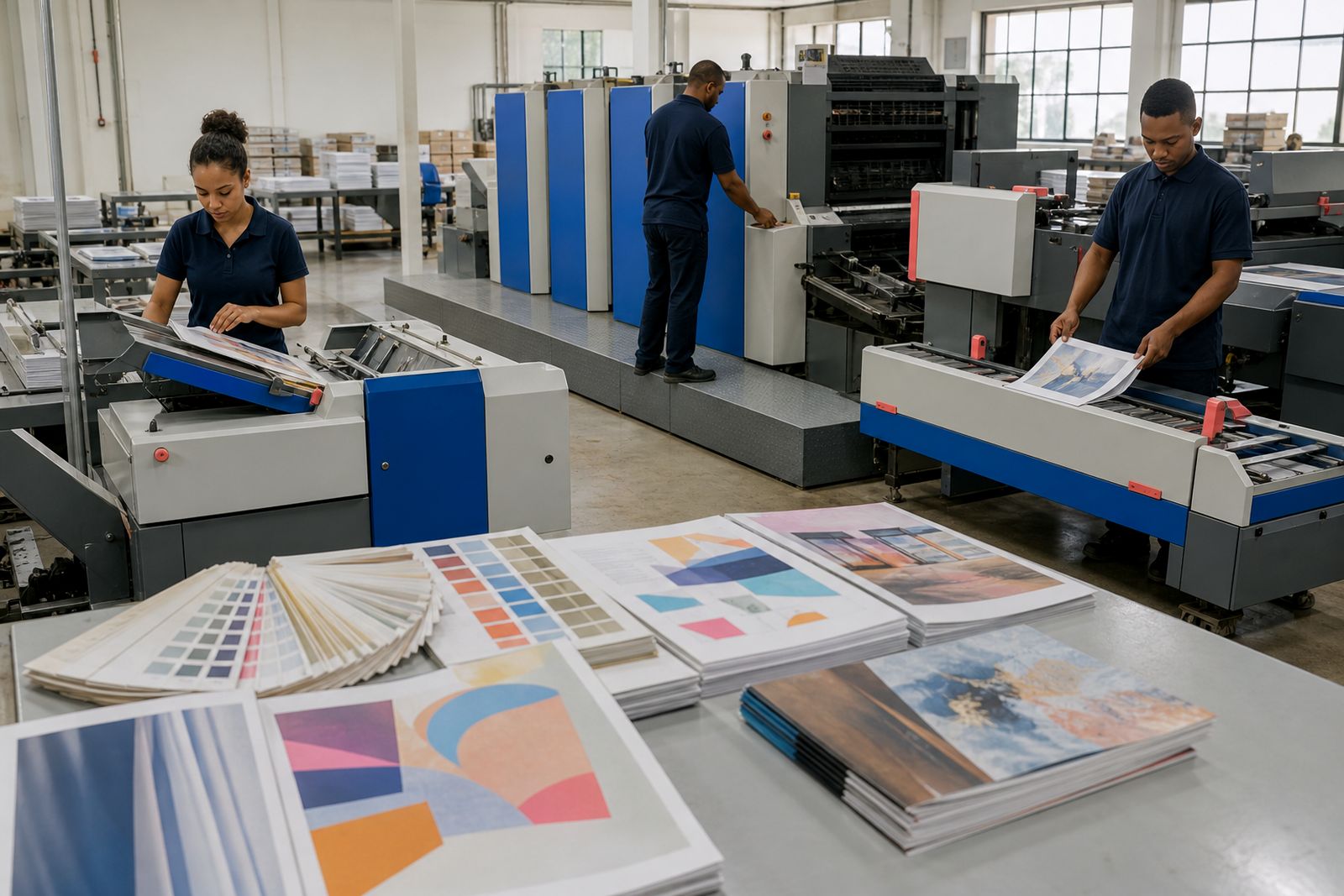
Bi-fold and gate fold brochures give you more room than a flat leaflet while keeping the piece neat in hand. We print both formats on sheet-fed offset presses for launches, product sheets and campaign packs delivered from Epping to every province.
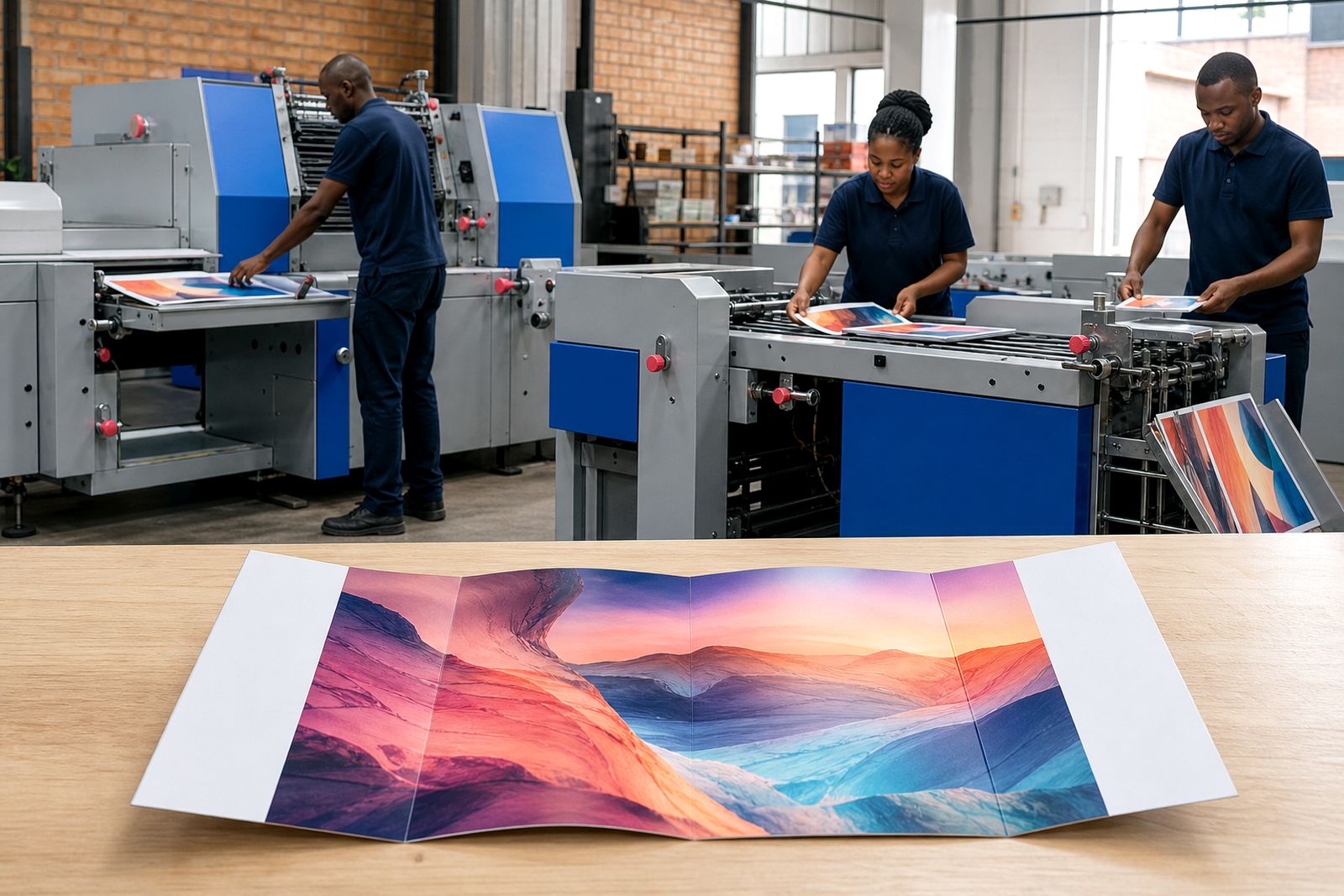
Two brochure formats with different jobs
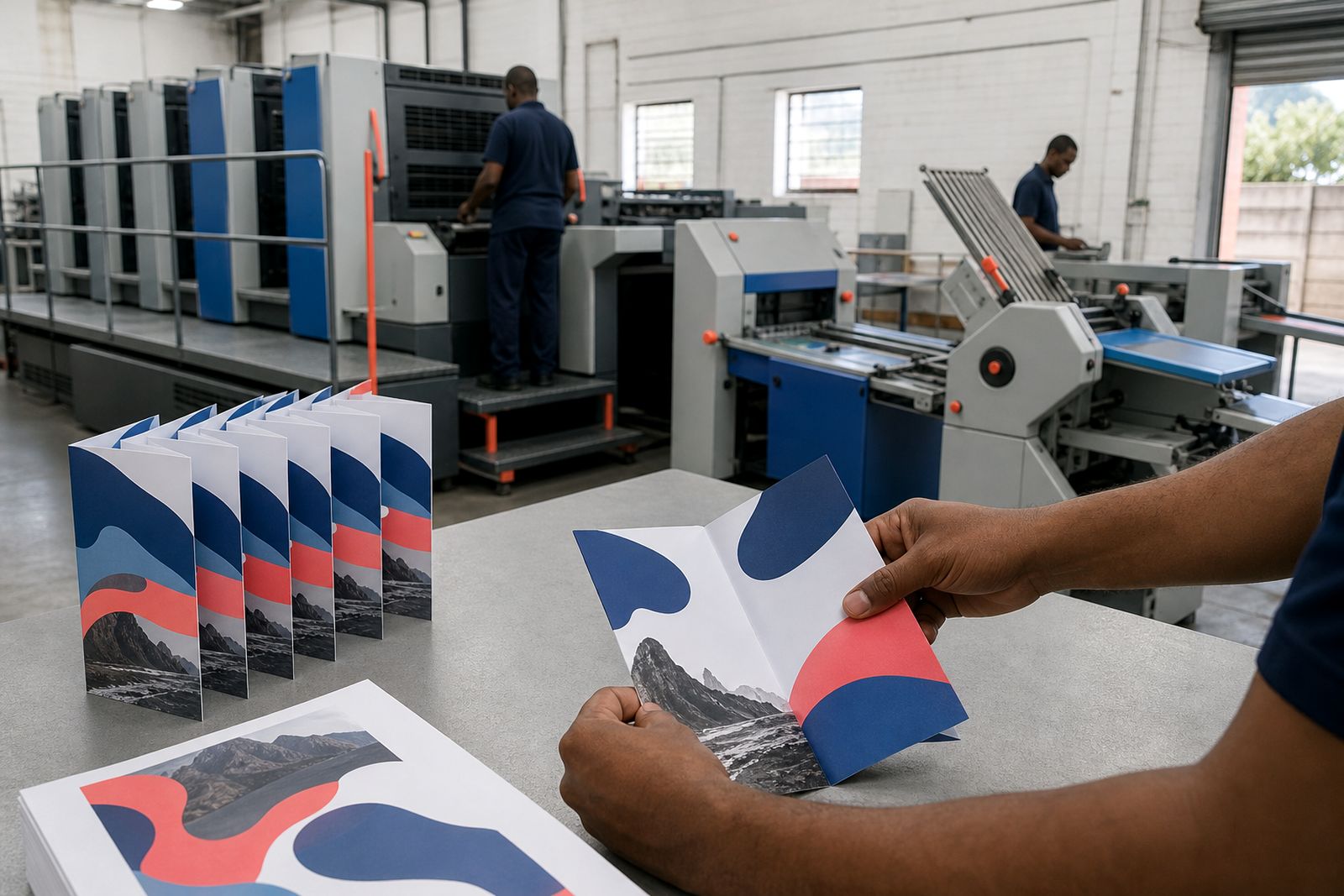
A bi-fold brochure is a single sheet folded once to make four panels. It reads like a short booklet and suits company overviews, service summaries, venue information and product sheets where the reader moves from cover to inside spread without too much interruption.
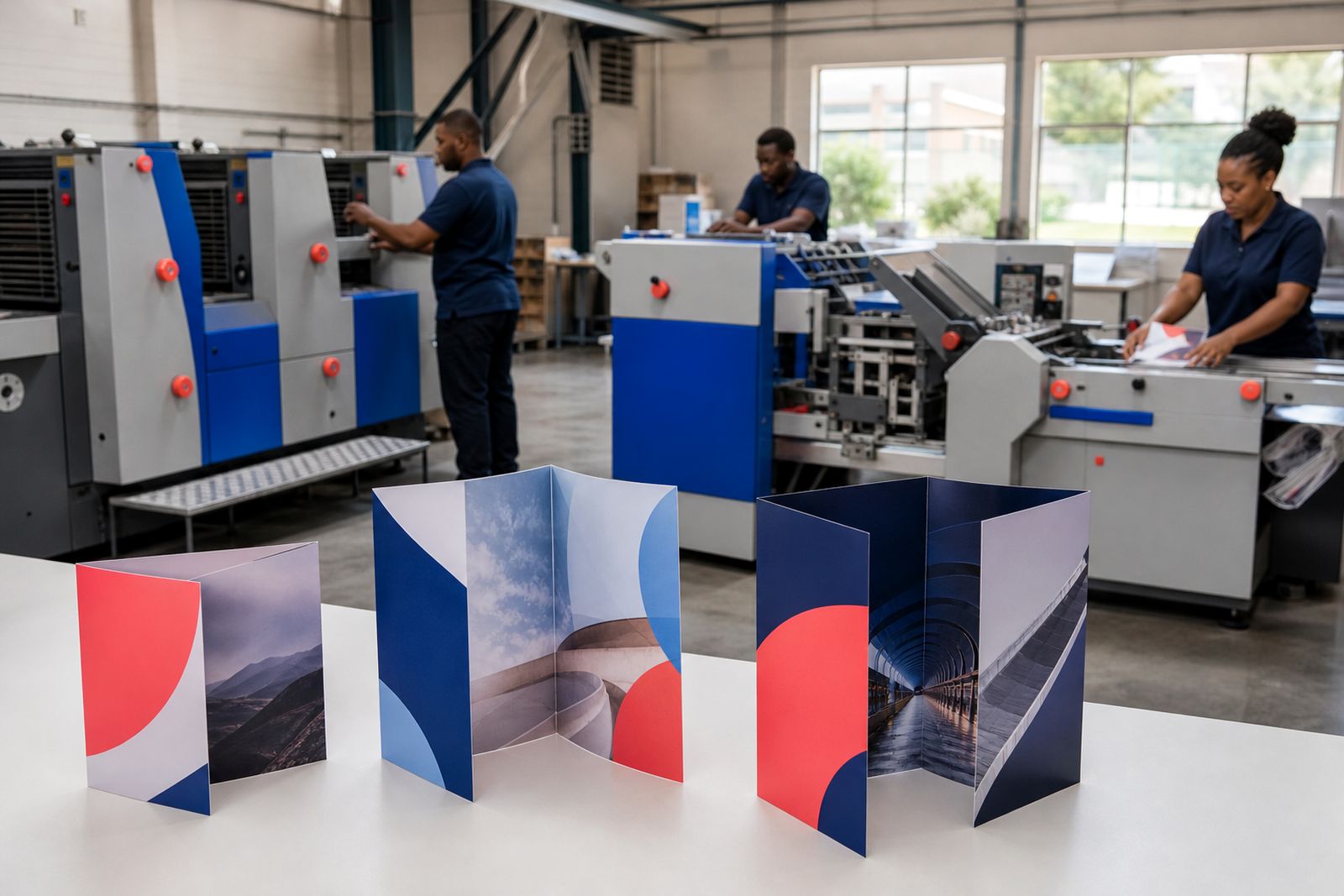
A gate fold brochure folds the two outer panels inward to meet in the middle, opening onto a wider centre spread. This format works well when you want a reveal for a launch, a hero image, a map, or a key product range. It looks smart in presentation packs and can carry more impact than a standard fold, but it needs careful panel planning so the fold-in sections sit properly.
- Bi-fold: four panels, clean page order, easy to file and hand out.
- Gate fold: six panels, centre reveal, stronger visual opening for launches and premium handouts.
- Both are printed by offset for solid colour, sharp text and consistent results across the run.
Common sizes and practical limits
We print bi-fold and gate fold brochures in sizes that fold neatly for posting, counter displays and meeting packs. A common bi-fold option is A4 finished size, supplied flat as A3 before folding. Smaller bi-fold pieces such as A5 finished size are often used for event programmes and compact inserts.
Gate fold pieces are usually planned from a larger flat sheet and then folded to a finished A4 or DL style format. The important detail is panel width. The fold-in gate panels must be slightly narrower than the centre panels, otherwise the brochure can bind at the fold and sit proud. That small adjustment matters more than most people expect.
- Bi-fold brochures can be printed portrait or landscape.
- Gate fold brochures need an accurate panel layout before artwork is approved.
- Heavy stocks can crack on folds if the sheet is not suited to the job or if scoring is not allowed for in the spec.
- Very dense coverage across fold lines needs attention during artwork checks, especailly on dark solid colours.
If your piece needs inserts, perforation, numbering or a reply panel, mention that from the start so the flat size and fold plan match the job.
Where bi-fold works best and where gate fold earns its place
Bi-fold brochures suit information-led pieces. They are easy to read on a lap or at a counter, and the inside spread gives enough space for tables, diagrams and a clear call to action. Schools, churches, agencies, NGOs and company marketing teams often use them for open day packs, course outlines, service lists and event notices.
Gate fold brochures are better when the opening moment matters. Product launches, campaign reveals, showroom handouts and premium direct mail pieces all benefit from the centre spread. If the content is mainly plain text with very little hierarchy, a gate fold can be more format than function. In those cases a bi-fold or a tri-fold tends to read better and wastes less paper.
- Use bi-fold for price sheets, service brochures, compact annual summaries and venue material.
- Use gate fold for product reveals, range launches, maps, invitations and centre spread visuals.
- Avoid gate fold where postal handling is rough and the piece has no protective outer cover.
- Avoid overloading either format with too many messages on every panel, the folds already create natural breaks.
Artwork, proofs and fold planning
Folded work needs more than a nice layout. Panel order, creep at the fold, image breaks and safe text margins all need checking before the job goes to press. We ask for print-ready artwork and review the setup before proofing. A proof is issued before print so the fold sequence, panel widths and main content can be confirmed.
For gate fold brochures, the inside reveal must line up with the outer meeting panels. Headlines placed too close to the fold can look awkward once the brochure is closed. For bi-fold work, the main thing is to keep text and logos away from the spine fold and trim edge. If you are planning a response form, map panel or product table, say so early because that affects the way the brochure should open and read.
- Supply the finished folded size and the flat open size if known.
- Tell us whether the brochure should read portrait or landscape.
- Confirm the fold type clearly: bi-fold or gate fold.
- Include any finishing such as scoring, gloss or matt lamination, and spot coating if required.
Handling, storage and delivery notes
These brochures are delivered folded and packed for courier dispatch from Epping. Once they arrive, keep cartons dry and flat, away from direct sun and coastal damp where possible. In Cape Town humidity can soften some coated stocks if boxes are left open for long periods, and folded edges can pick up marks during a busy event setup.
If brochures will be inserted into folders, posted in envelopes or packed with samples, tell us the final use when you enquire. That helps us advise on stock feel, fold strength and whether extra protection such as lamination is worth adding. For handouts at launches and exhibitions, plan a clean table or shelf space rather than stacking them loosely in high-traffic areas, they can scuff faster than many teams expect.
What to send with your enquiry
The clearest brochure enquiries include the intended finished size, fold type, page or panel plan, stock preference and delivery town. If the job is replacing an existing brochure, mention what needs to change such as language versions, updated product tables or a new centre spread image. We also need to know whether you have print-ready artwork or still need the file prepared by your own designer.
- Finished size and open flat size, if you have it.
- Bi-fold or gate fold format.
- Quantity range.
- Single-sided or double-sided printing.
- Preferred paper stock and finish.
- Any folding, scoring, lamination or spot coating.
- Delivery town and whether cartons go to one address or several.
Send those details through our contact form and we can assess the print method, folding plan and proof route properly.
What our Brochure Printing customers say
Verified Google reviews
Questions we get asked
Can gate fold brochures use the same panel widths all the way across?
Usually not. The two outer gate panels are normally made slightly narrower so they fold in neatly without catching. If all panels are equal the finished piece can spring open or mark at the fold.
Are bi-fold brochures better for product sheets?
In many cases yes. A bi-fold gives a simple reading path and enough room for features, tables and contact details without forcing too many narrow panels. Gate fold is better when you want a stronger reveal.
Can you print on both coated and uncoated stocks?
Yes. The right choice depends on the look of the brochure, the amount of ink coverage and how the folded piece will be handled. If the brochure is for frequent passing around, mention that when you enquire so the finish can suit the use.
Also worth a look
Tell us about the job
Send sizes, materials and where you are through our contact form, and we will come back with the practical options.
Open the contact form