

Tri-fold brochures
Tri-fold brochures turn one flat sheet into six reading panels that open in a clear, familiar sequence. They suit menu handouts, service summaries, price sheets and promotional mailers where you need more room than a flyer without moving into booklet format.
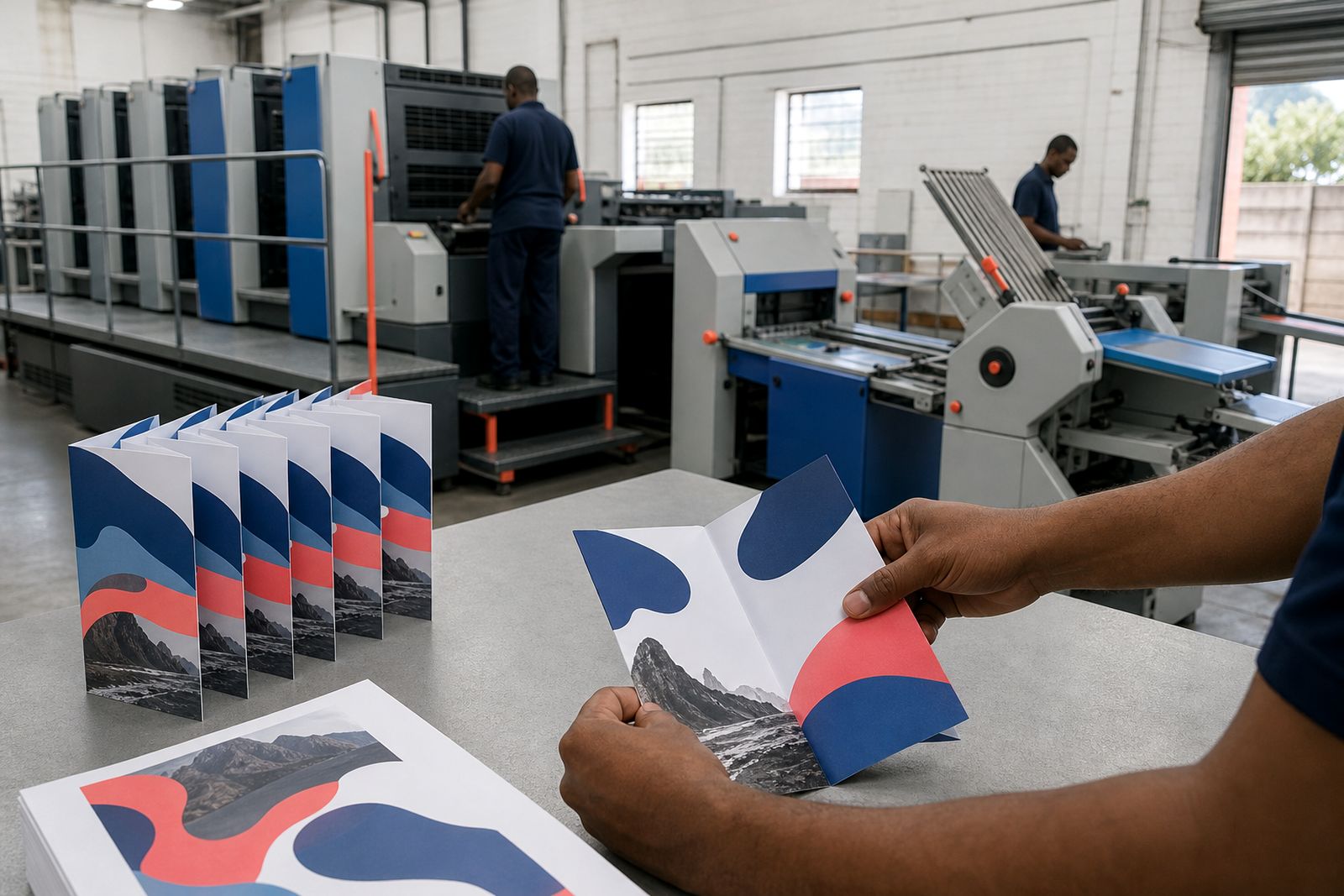
How a tri-fold brochure works
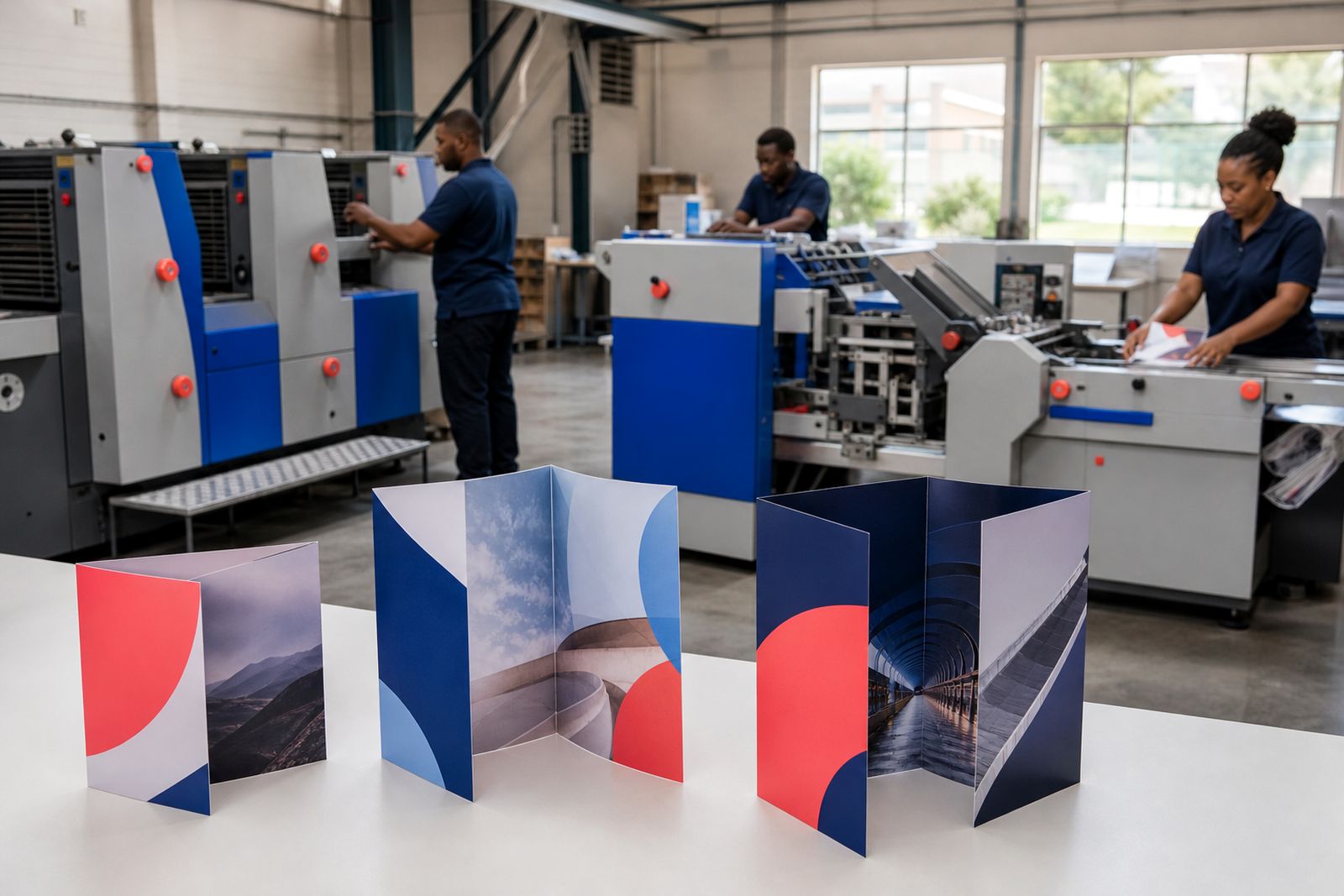
A tri-fold brochure is made from a single printed sheet, folded twice so the finished piece has six panels to read. The most common version starts as A4 and folds down to a narrow panel format that fits reception counters, display stands, conference packs and direct handouts neatly. Because the outer panel folds inward, the layout needs a proper panel plan rather than three equal pages dropped into a file.
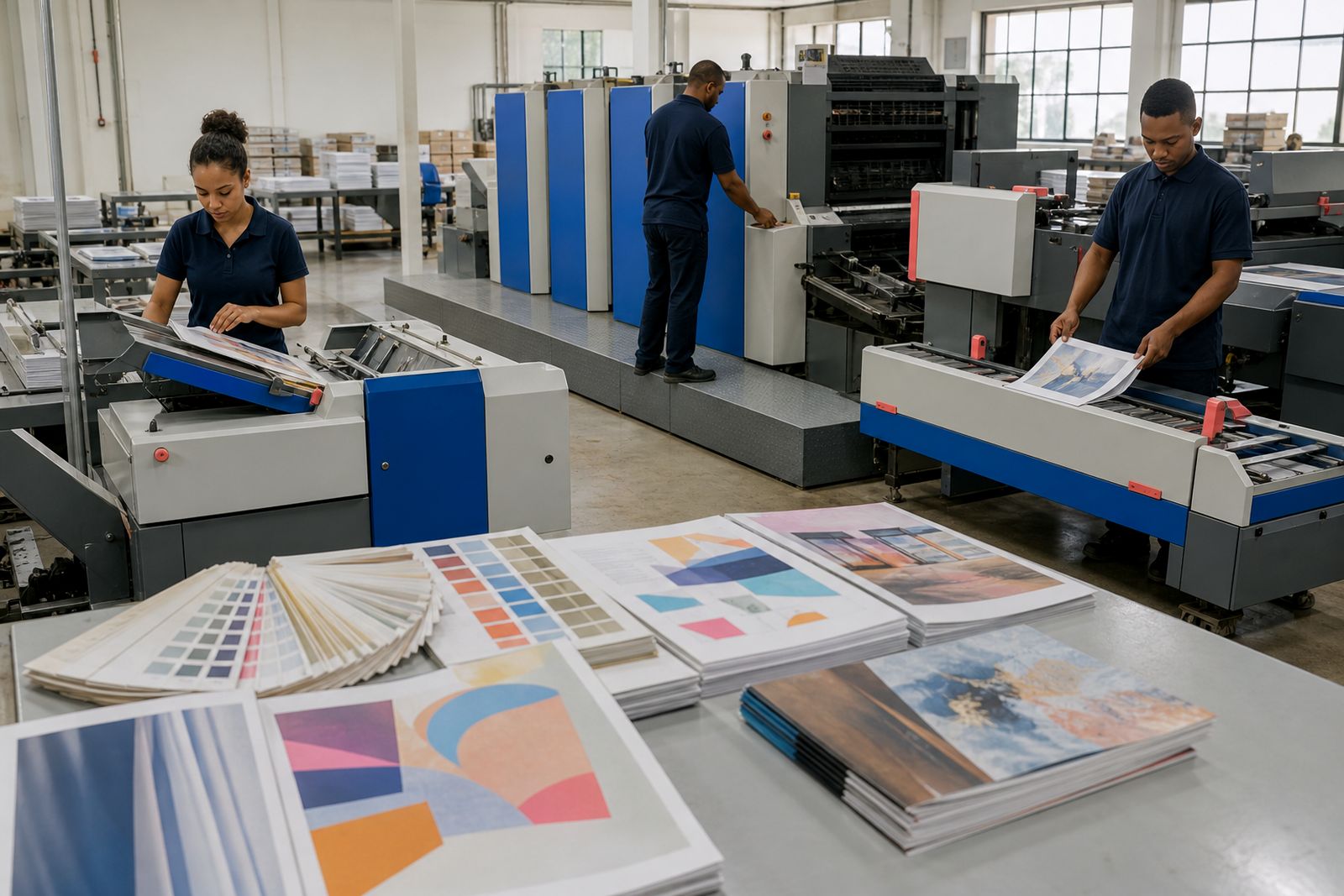
On offset presses, tri-fold brochures work well when the copy has a clear order from cover to inside spread to closing panel. Restaurants use them for menus, training providers use them for course outlines, and service businesses use them for package lists, branch details and booking information. Where the content starts getting dense, a booklet or a saddle stitched brochure usually reads better.
- Six reading panels from one sheet.
- Most often supplied as A4 folded to a slim finished size.
- Available printed one side or both sides, depending on the brief.
- Folds can be set as roll fold or letter fold where the layout requires it.
Sizes, folding options and working limits
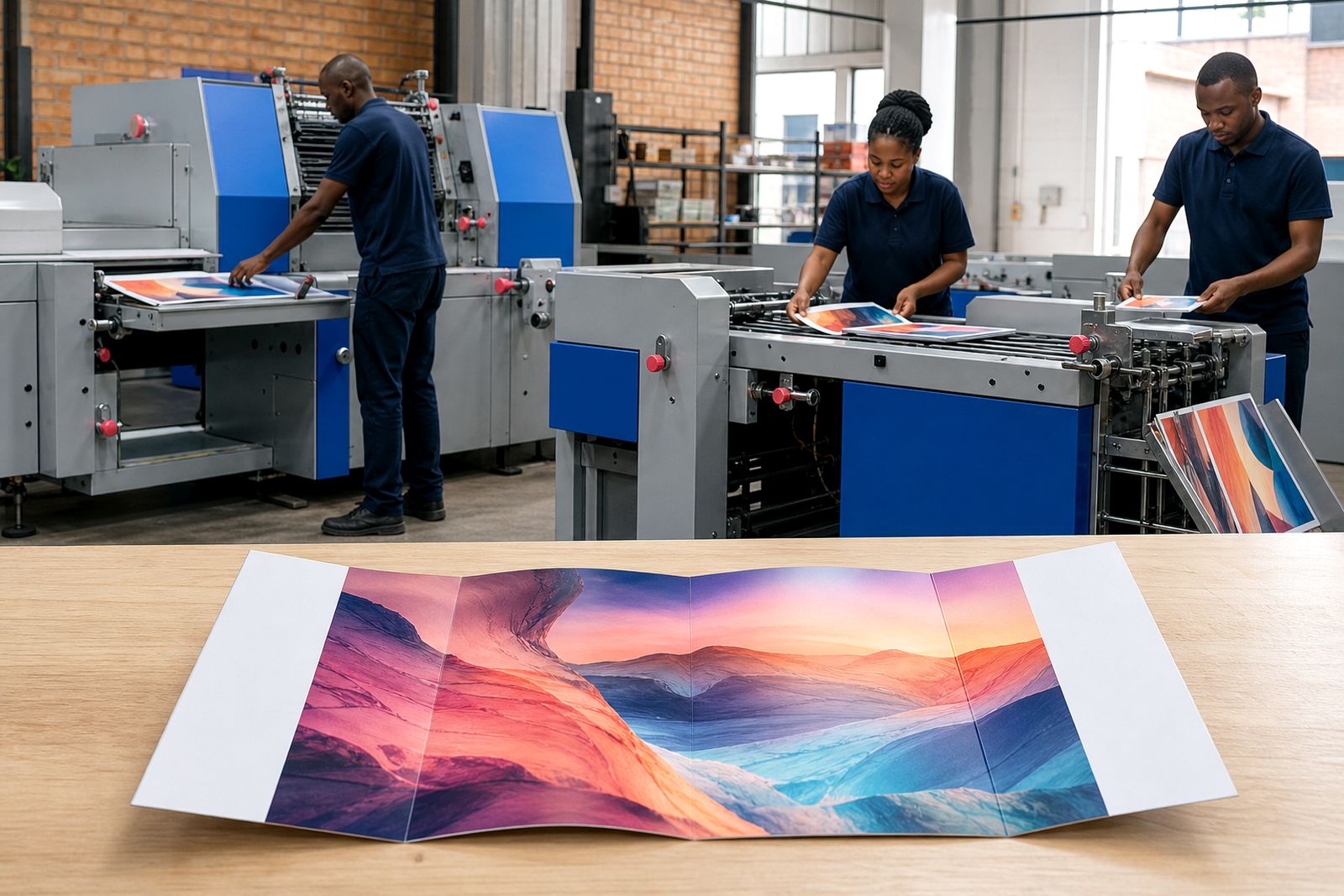
The standard choice is an A4 sheet folded to a finished DL style format. We can also quote other flat sizes where the panel proportions still fold cleanly on sheet-fed offset equipment. The key limit is the fold itself: the inside fold panel usually needs to be slightly narrower so the piece closes properly without buckling or cracking along the spine line.
Large blocks of solid ink across fold lines need care, especially on darker colours or coated stocks. Heavy coverage can mark if stacks are handled roughly before the fold has settled. Very bulky paper stocks are not ideal for a classic tri-fold because each fold adds thickness, and the finished edge can flare. If you want a more premium stock with less stress on the fold, a bi-fold or gate fold may suit the brief better.
- Common flat size: A4.
- Common finished format: DL style tri-fold.
- Panel widths are not always identical because one panel tucks in.
- Suitable for short, structured content rather than long reading matter.
- Works best when images and text stay clear of fold lines and trim edges.
Where tri-fold brochures suit the job
This format is a good match for information that benefits from sections. A front cover can introduce the offer, the inside panels can explain services or list products, and the closing panel can carry contact details, trading information or a map. It is also useful where a piece must travel by hand from one person to another, or sit in a holder at a branch, foyer or exhibition table.
Tri-fold brochures are less suitable when you need large uninterrupted images, long technical copy or many item references. Those jobs often read better in a catalogue, booklet or unfolded price sheet. If every panel is crowded, the brochure can feel cramped and the reader loses the natural sequence of the fold. A bit of white space matters here more than people expect.
- Menus and takeaway inserts.
- Service summaries for clinics, schools and consultants.
- Price sheets with grouped offers.
- Church notices, event programmes and NGO handouts.
- Tourism, property and hospitality leave-behinds.
Artwork setup and proofing points
For tri-fold work, panel planning matters as much as the print file itself. The front cover, back panel and tuck-in panel must sit in the right order, and the fold direction needs to be stated clearly on the artwork. We check files before print and send a proof so the panel flow, text breaks and image positions can be confirmed before the run goes to press.
Keep important text away from fold lines, especially prices, phone details, QR codes and small body copy. Thin borders around the outer edge can look uneven after trimming and folding, so they are usually best avoided. If a design uses photographs across more than one panel, allow for a small visual break at the fold. Coastal humidity can soften paper slightly during storage, so clean packing and accurate fold setup make a real difference once the cartons reach Cape Town, Durban, Gqeberha or inland depots.
Handling, packing and storage at your branch or event site
Tri-fold brochures arrive folded, packed and ready for distribution by courier to every province. At your office, school, church or venue, keep the cartons level and dry until needed. If the brochures are for a function or campaign launch, it helps to move only the quantity needed for that day onto counters or tables, while the balance stays boxed and protected from dust and damp air.
Brochures carried loose in vehicle boots or under other event materials can pick up rubbed edges quite quickly. If you are sending stock to several branches, split the quantities by destination before the cartons are opened too widely. Neat handling keeps the folded edge crisp, which matters on coated stocks and dark cover colours.
- Store cartons off concrete floors where possible.
- Keep away from direct sun and damp storerooms.
- Open boxes carefully to avoid nicking brochure edges.
- Use smaller internal bundles for counters, packs and events.
What to send with your enquiry
When you ask us to quote, send the flat size, the intended finished fold, the page count in practical terms such as six panels, the print sides, the stock preference and the quantity range. Tell us whether the brochure is for menus, services, promotions or a price sheet, because that often affects the best finish and fold direction. If you already have artwork, mention whether it is print ready or still being prepared.
It also helps to note where the brochures are going, whether to one Cape Town delivery point or split by province through courier distribution. If the job includes a proof requirement for internal sign-off, say so early. You can send the details through our contact form and we will line the job up with the right folding and finishing method for the brief.
- Flat size and final folded format.
- Single-sided or double-sided printing.
- Paper type and finish preference.
- Quantity required and delivery town.
- Whether you need scoring, folding and packed bundles by branch or event.
What our Brochure Printing customers say
Verified Google reviews
Questions we get asked
Can a tri-fold brochure carry a full price list?
Yes, when the list is short and grouped clearly. If the content runs long or needs many item references, a booklet or catalogue format is usually easier to read and update.
Do all three panels have to be exactly the same width?
Not always. The inside tuck panel is often set slightly narrower so the brochure closes properly after folding.
Can you check my artwork before printing?
Yes. We check artwork, flag obvious setup issues and send a proof before print so panel order, fold direction and content flow can be confirmed.
Also worth a look
Tell us about the job
Send sizes, materials and where you are through our contact form, and we will come back with the practical options.
Open the contact form