

Print guides
This section gathers the practical notes that help brochure and catalogue jobs move cleanly from brief to print. Read across the guides if you are weighing up folds, binding, artwork setup, proofs or paper finishes.
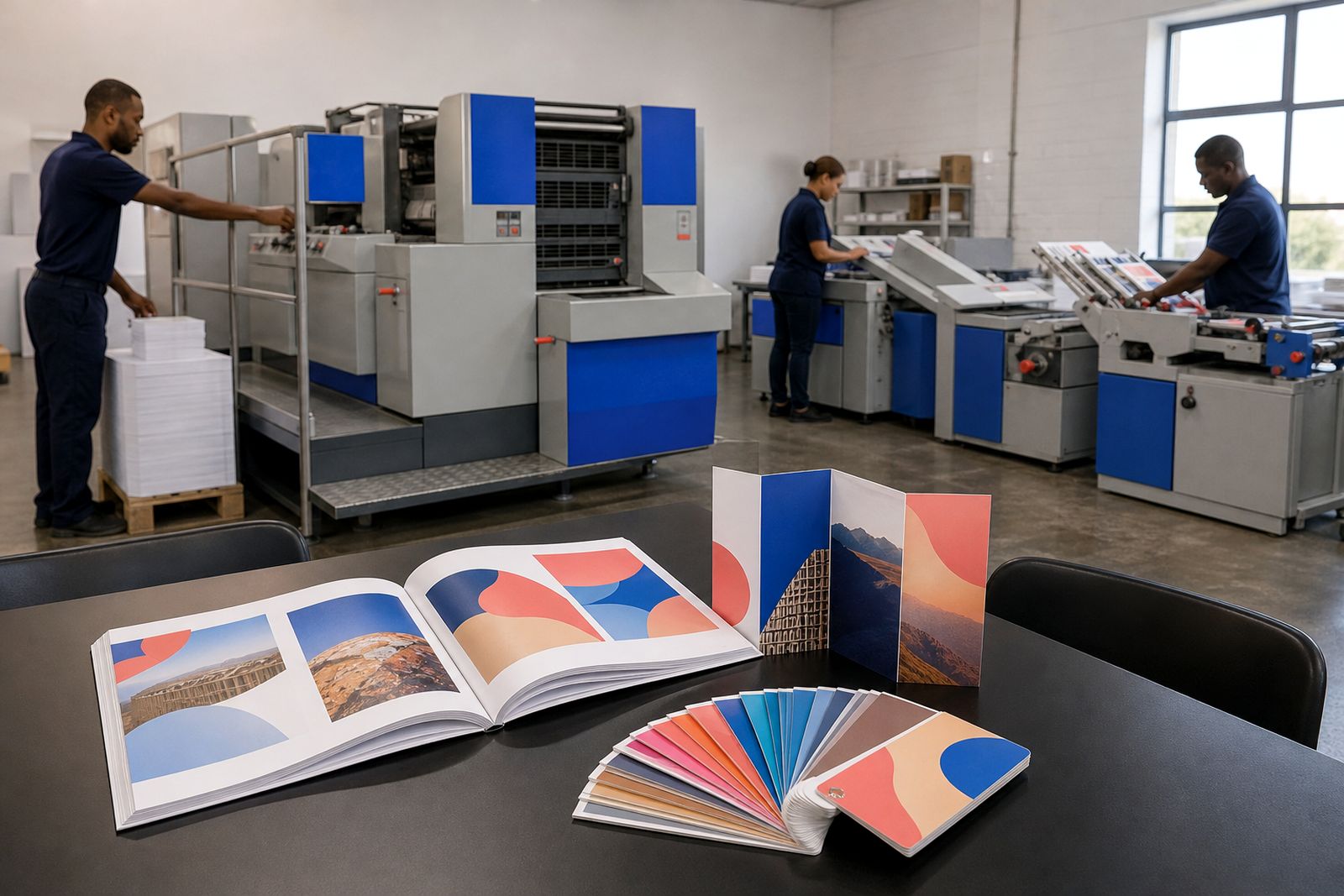
Where these guides fit into your print brief
Our guides are written for people ordering brochures, catalogues, booklets, flyers and leaflets on sheet-fed offset presses, without turning a straightforward job into a long print theory lesson. They cover the choices that affect how your pages read in hand, how artwork must be supplied, and what to expect before approval goes to press.
Most customers do not need every guide. A folded handout for a showroom launch needs different reading from a thick product catalogue headed for branches around the country. Start with the format you are planning, then move to paper, proofs and artwork if anything still needs sorting.
Choosing the guide that matches the job
A short brochure and a multi-page catalogue may both be printed offset, but they are not briefed in the same way. The pages in this section help you narrow the job down before asking for a quote, which saves a fair bit of back and forth later.
- Read the brochure fold guide if you are deciding between tri-fold, bi-fold or gate fold layouts.
- Open the catalogue planning guide if page count, sections or product grouping still feel loose.
- Use the offset versus digital guide when quantity, image consistency and format are pulling in different directions.
- Check the artwork setup page when your studio is exporting files and wants the trim, bleed and reading order right first time.
- Read the proofs and colour checks page when brand colours, skin tones or dense image pages need a closer look.
A practical comparison before you request a quote
If you are comparing options, keep the printed purpose in front of you rather than the name of the format. A fold, binding style or finish only helps when it suits the way the piece will be held, read, posted or handed out.
- Tri-fold brochures suit compact information blocks, price summaries and leave-behinds where space is tight.
- Bi-fold brochures give larger panels, so images and maps sit more comfortably with less panel interruption.
- Gate fold brochures work well when the centre spread needs a stronger reveal, though artwork setup must be more exact.
- Saddle stitched catalogues are often better for lighter page counts and event programmes.
- Perfect bound catalogues suit thicker documents where a square spine helps with shelf presence and section naming.
- Flyers and leaflets are the simpler route when no fold or binding is needed and the message must land fast.
When two formats seem close, think about handling. If a sales rep needs to slip pieces into sample packs, folded work may make more sense. If products need full-page photography and orderly indexing a bound format usually reads better.
The print decisions that change the finished piece
Paper and finishing choices do more than alter appearance. They affect how pages turn, how colour sits on the sheet, and whether the job feels formal, promotional or purely informational. This is where many buyers find the most useful detail, because the right stock can settle the tone of the piece before a single word is read.
Gloss and matt surfaces behave differently under office lights and showroom lighting. Lamination can help covers resist handling marks, while spot UV is more selective and works best when there is a clear design reason for it. In Cape Town humidity also matters with storage and packing, especially on longer courier runs into other provinces, so a sensible finish choice is not only about looks.
Proofs, artwork and the checks worth doing early
The strongest print jobs are usually the ones where file issues are caught before plates are made. Our guides on proofs and artwork setup explain trim size, bleed, safe margins, page order and image handling in plain terms, so your team can send a cleaner file set to start with.
A proof is the point where pagination, copy flow and major visual issues should be checked carefully. It is not only about colour. Cross-check product codes, contact details, tables and inside covers as well, because small admin errors are often the last things seen and the first things noticed after delivery. That sounds obvious but it gets missed more often than people think.
Using this section with your online order
Once the format is clearer, these guides feed directly into the online ordering process. You can gather the trim size, page count, fold type, binding method, paper preference and finishing notes before sending the brief through, which makes the specification easier to price and check.
If one part of the job is still uncertain, read the closest guide first and note the options you are choosing between. Then send that outline through our contact form with the artwork status and delivery province. From Epping we print and courier brochures and catalogues nationwide, so a tidy brief helps the job move neatly from checking to proofing to print.
Explore the range
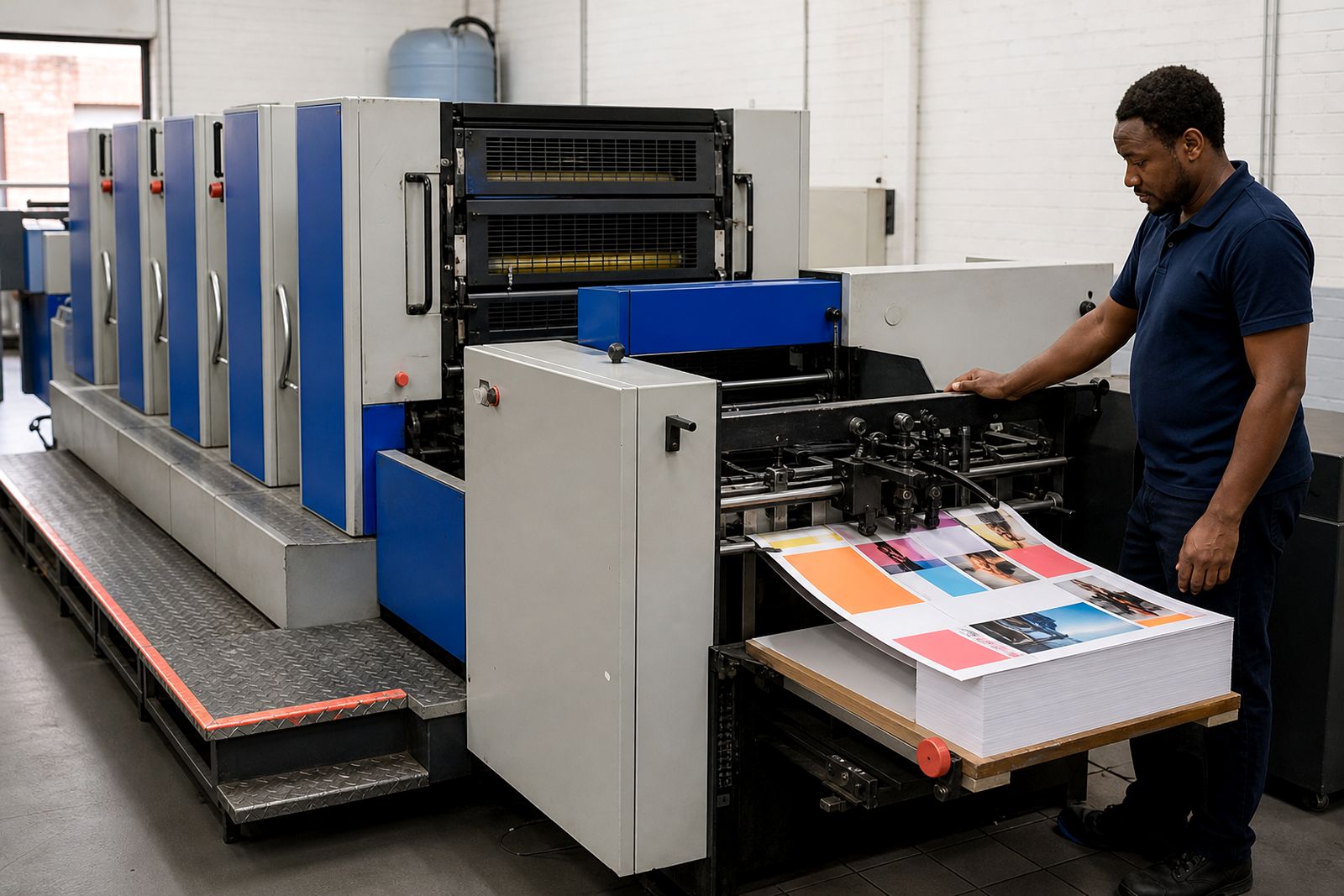
Offset or digital printing
A practical guide to when offset makes better sense than digital for brochures, catalogues and folded print.
Read more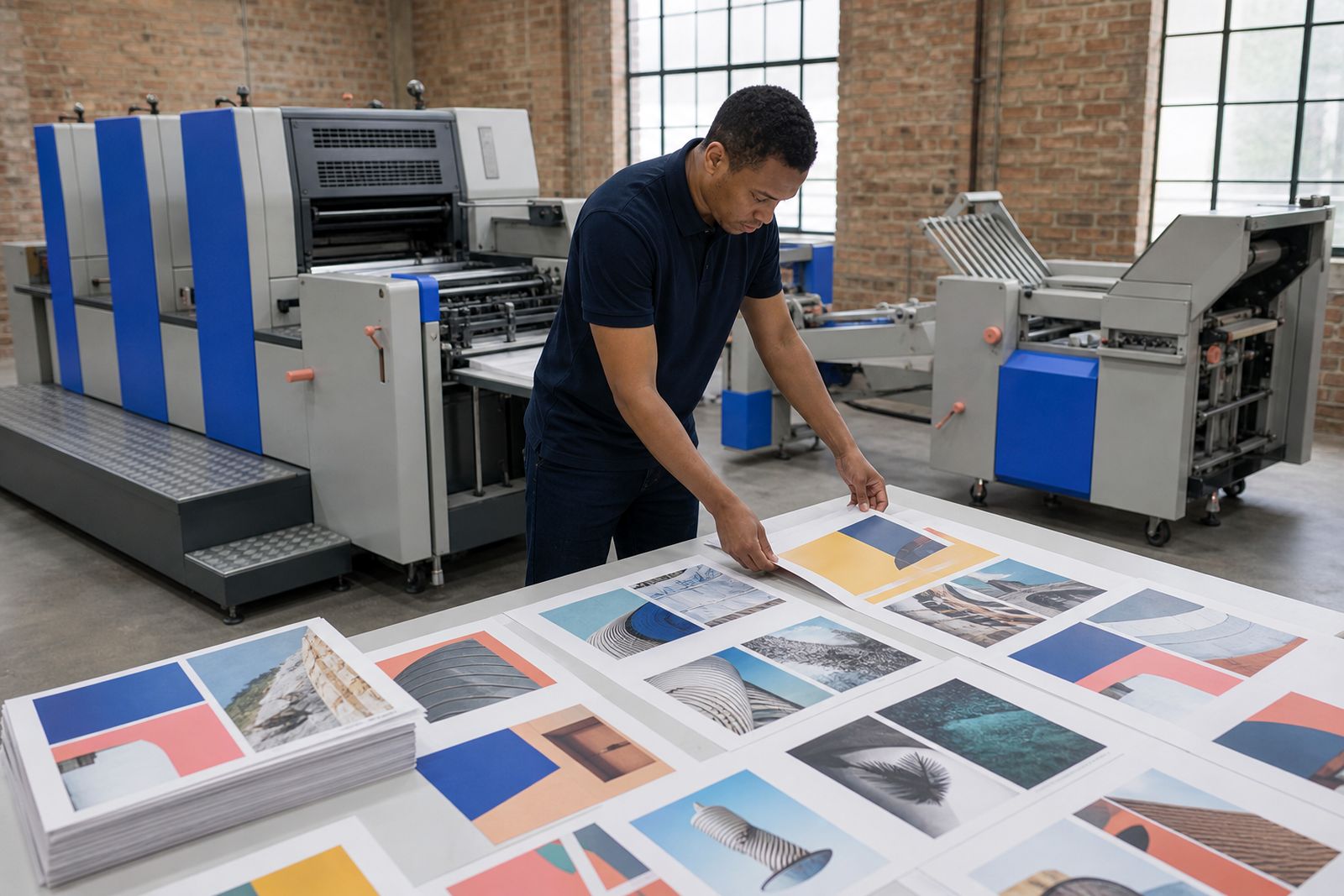
Planning a product catalogue
A practical guide to page planning, image prep, section order and print timing for catalogues.
Read more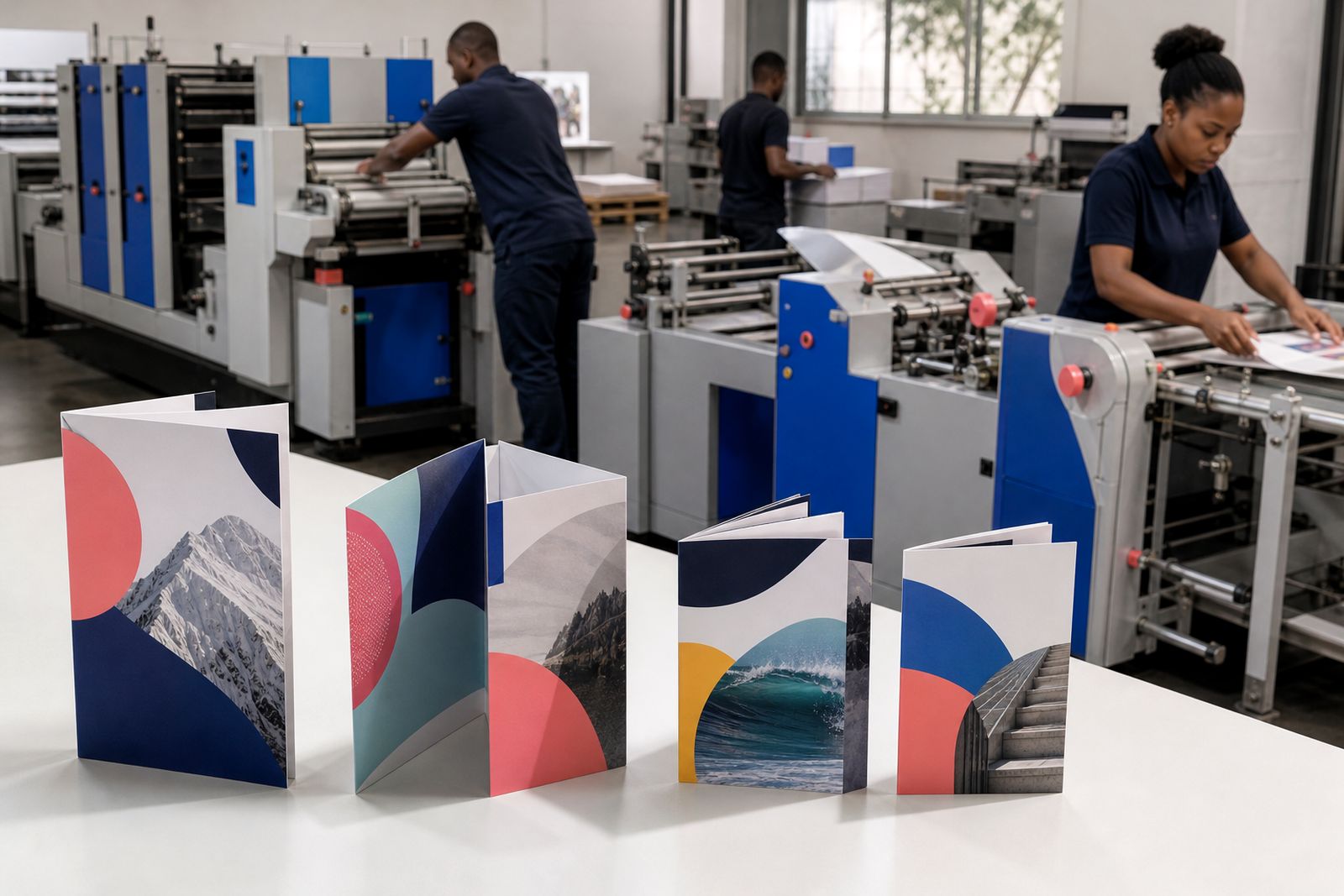
Choosing a brochure fold
A plain-language guide to matching brochure content, panel count and reading flow to the right fold.
Read moreWhat our Brochure Printing customers say
Verified Google reviews
Questions we get asked
Do these guides only apply to catalogues?
No. They are useful for brochures, catalogues, booklets, programmes, flyers and leaflets, especially where folding, binding, proofs or artwork setup need a decision.
Should I read the guides before asking for a quote?
It helps, but you do not need every detail finalised first. If you know the main purpose, approximate size, page count and whether the job folds or binds, that is enough to start shaping the specification.
Can I use these guides if my artwork is being prepared by an agency or studio?
Yes. The artwork and proofing notes are often shared with agencies and in-house marketing teams so everyone is working from the same print requirements.
Tell us about the job
Send sizes, materials and where you are through our contact form, and we will come back with the practical options.
Open the contact form