

Offset or digital printing
Offset and digital both have a place in print, but they do not suit the same jobs. For brochures and catalogues with proper page counts, consistent colour and cleaner unit costs at volume, offset usually carries the day.
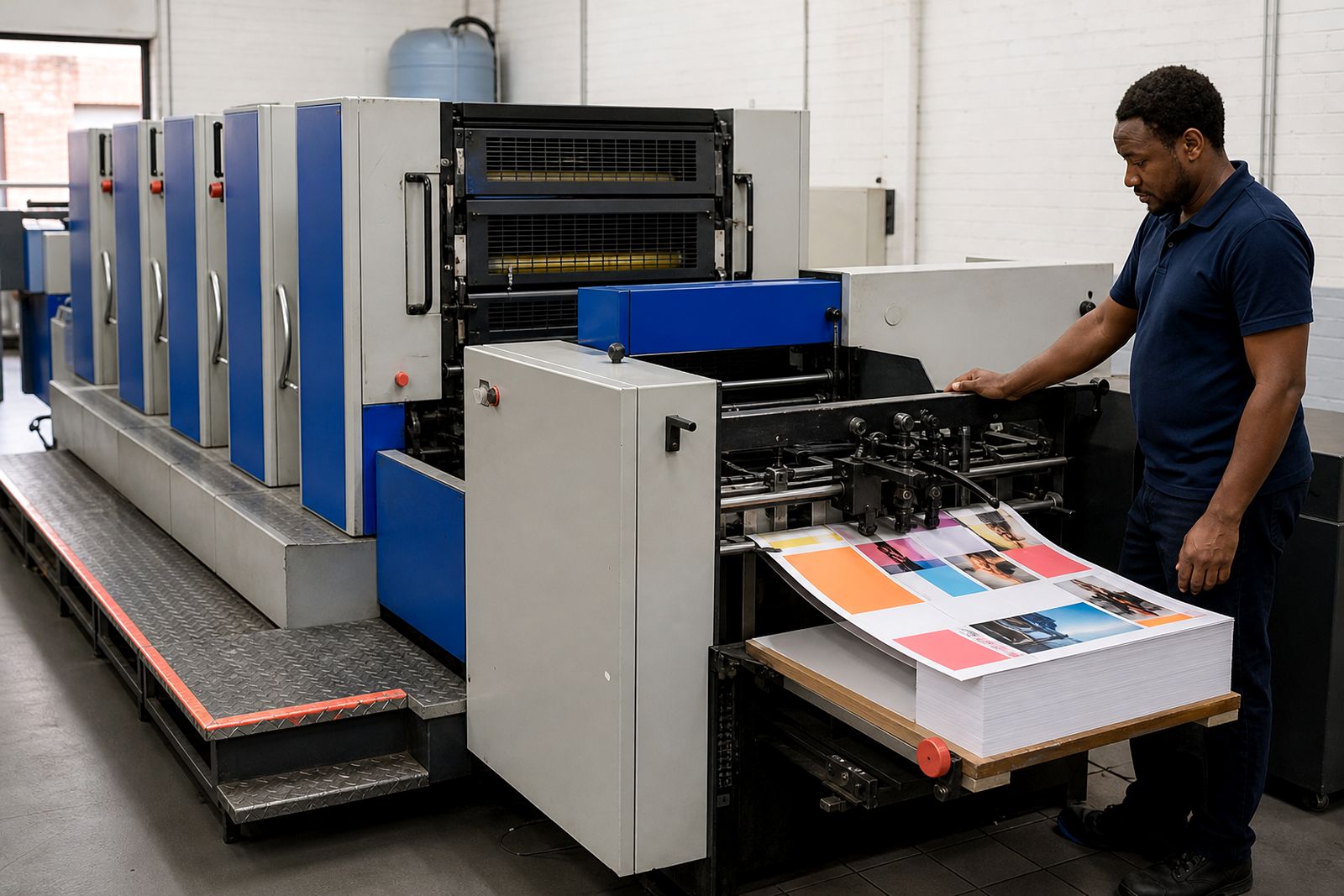
The real split is volume, format and finish
People often ask which process is better, as if one must win every time. In practice the choice sits on the job itself: how many copies you need, how the pages are built, what finish is expected and how closely the colour must hold from the first sheet to the last.
Digital printing suits short runs and very fast repeatable work. Offset printing starts to make more sense when a brochure or catalogue needs a steadier colour result, a wider choice of finishing methods and better value once quantities climb. That is especially true for sales packs, school prospectuses, church programmes and product catalogues where the same item is going out in boxes rather than in handfuls.
- Choose digital for short runs, limited pagination and quick internal pieces.
- Choose offset for medium to high quantities where consistency matters across the full run.
- Choose offset when folding, stitching or perfect binding forms part of the finished item.
- Choose offset when brochure panels, cover stock and inside pages need to work together cleanly.
Where offset starts pulling ahead
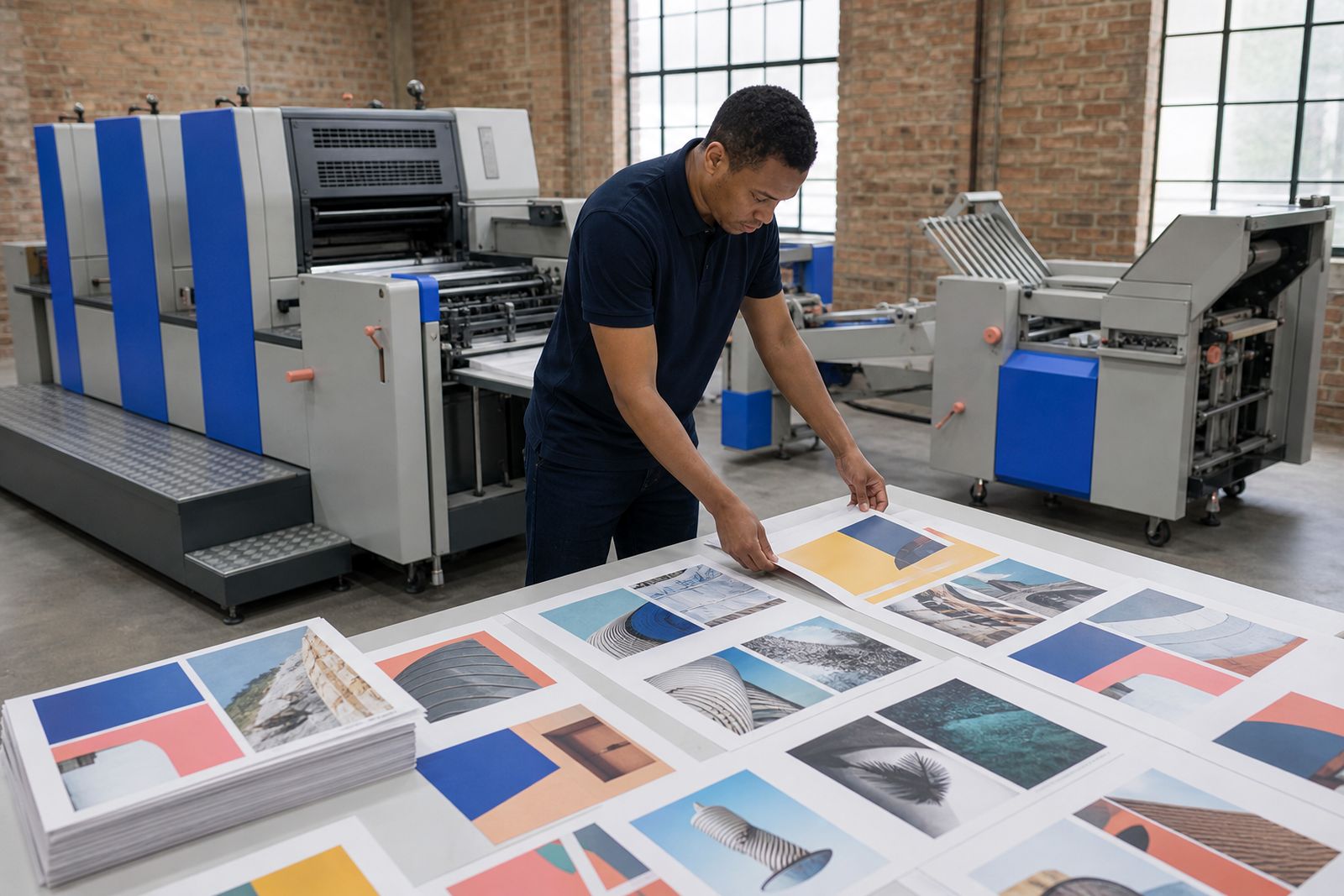
Offset earns its place when the printed piece must look settled and even, not patchy from batch to batch. Brochures with large solid areas, smooth tints, skin tones and brand colours generally benefit from the control that sheet-fed offset gives on press. The same applies to catalogues that carry many pages of product images where one section cannot suddenly look warmer or flatter than the next.
There is also a production advantage. Once plates are made and the press is running well, the cost per copy becomes more favourable over larger quantities. That matters for organisations distributing nationally, where cartons are being packed for Gauteng, KwaZulu-Natal, the Eastern Cape and inland towns in the same dispatch cycle. A digital run can be ideal for a trial batch, but for the main issue offset often lands better value and a more even finish.
- Brochures with strong photography and careful colour balance.
- Catalogues with many pages and repeated product layouts.
- Folded leaflets where scoring and accurate panel alignment are important.
- Booklets that need saddle stitching or perfect binding as part of the job.
Colour consistency matters more than many buyers expect
On screen, two blues may look close enough. In print, one can lean violet while the other goes grey, and that difference shows up quickly when brochures are laid out at a launch or packed into a sales rep kit. Offset gives more room to stabilise colour through the run, which helps when the job carries repeated backgrounds, image-heavy spreads or a cover that must match the inside pages properly.
This matters in South Africa where material may be viewed under mixed lighting, from a reception area in Epping to a school hall in Worcester or a retail counter in Gqeberha. If a catalogue is meant to hold a confident, uniform look from box one to box last, offset is usually the safer call. We still check artwork before print and send a proof, because good process starts before the sheets reach the press, but offset gives the production floor a stronger base to work from.
A workshop example from a busy Cape Town week
A recent week in Epping had two brochure jobs that looked similar at first glance. Both were full colour and both were headed for courier delivery beyond the Cape Town area. One was a short folded handout for a once-off event, with only a small stack needed. The other was a product catalogue with a proper cover, many inside pages and cartons going to several provinces.
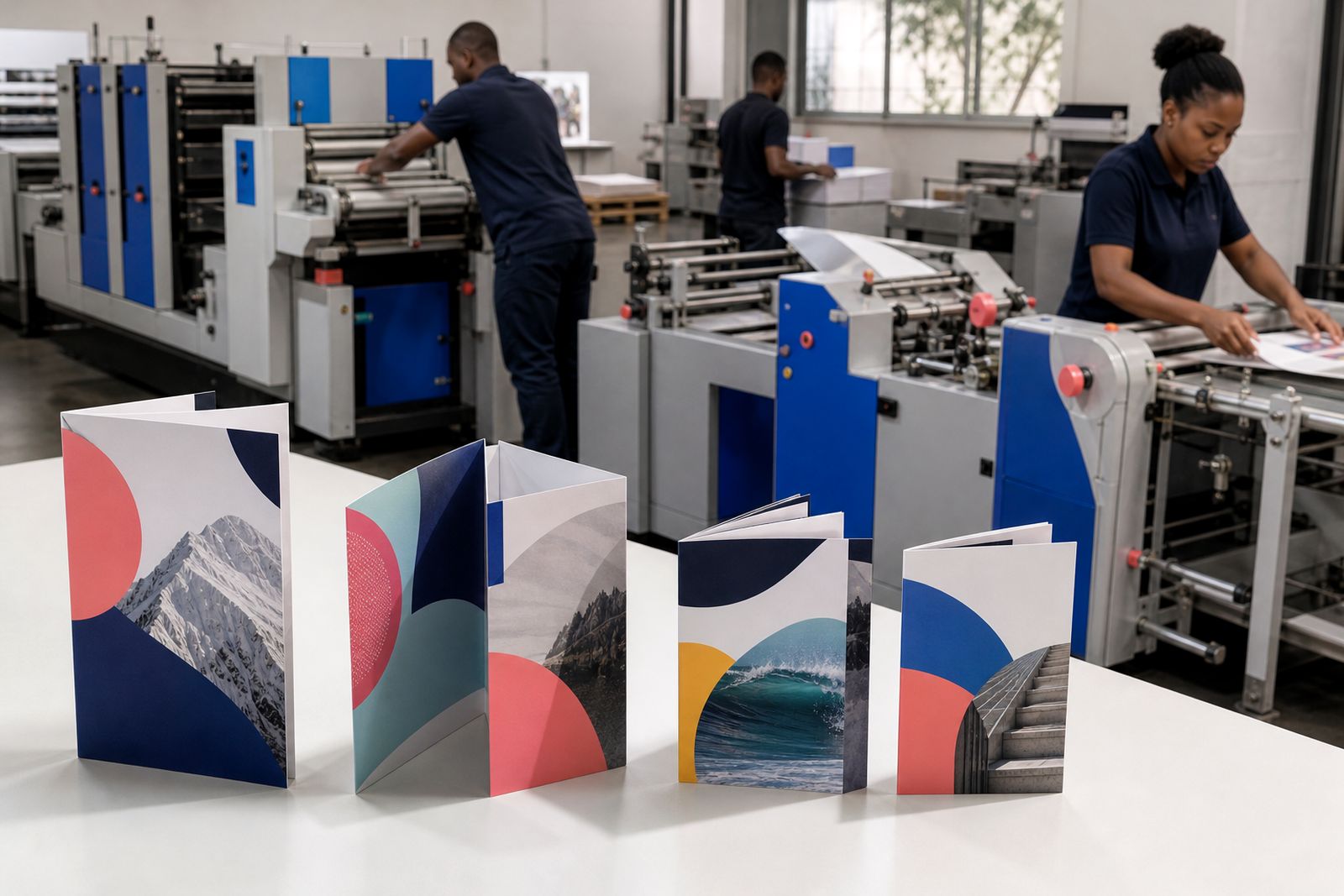
The short handout suited digital because the quantity was limited and the job did not need long-run economies. The catalogue was different. Its page count, stitched finishing and the need for even colour over the full batch made offset the better route. Once folded, gathered and stitched, the catalogue looked more settled through the stack, and the unit costing worked better for the larger dispatch. Same week, same workshop pressure, two different answers. That is normal in print.
Questions worth settling before the method is chosen
Buyers can save a lot of friction by deciding the practical parts early. The print method should follow the job brief, not the other way around. If you know the format, page count and how the item will be distributed, it becomes far easier to judge whether offset is the right fit.
- How many copies are going out, and to how many branches, campuses or regions?
- Is this a folded brochure, a stitched booklet or a perfect bound catalogue?
- Are there solid colours, soft tints or image spreads that need to hold evenly?
- Does the piece need a coated stock, lamination or spot gloss detail on the cover?
- Will cartons be couriered nationally, making consistency across the full run more important?
Where those answers point to a substantial printed item rather than a quick short run, offset usually makes more sense. If the brief is still taking shape, our contact form is the best place to send the size, page count, folds and intended quantity so the job can be guided in the right direction.
For brochures and catalogues, offset usually wins on the complete job
The mistake is to compare print methods only at the point where the sheet comes off the machine. Real jobs include proofing, paper choice, folding accuracy, binding method and how the finished stack looks when it lands with the reader. On that fuller test, offset regularly beats digital for brochures and catalogues ordered in meaningful quantities.
That does not make digital lesser. It remains useful for smaller batches and certain short-run needs. But if the piece is meant to represent a business, school, church, agency or NGO with a more settled printed result, offset is often the stronger route. For online ordering of brochures, catalogues, booklets, flyers and leaflets, the method should be chosen around the brief not around fashion, and for many South African brochure jobs the brief points clearly to offset.
What our Brochure Printing customers say
Verified Google reviews
Questions we get asked
Does offset always cost less than digital?
No. Digital can suit short runs very well. Offset tends to become the better value option when quantities rise and the job includes more demanding finishing or longer page counts.
Is offset only for very large catalogues?
Not only. It is often a strong choice for brochures too, especially where colour consistency, folding quality and a cleaner result across the full run matter.
Can I order online and still have artwork checked before print?
Yes. We work from a clear specification and quote process, check supplied artwork and issue a proof before print so the job is aligned before production starts.
Tell us about the job
Send sizes, materials and where you are through our contact form, and we will come back with the practical options.
Open the contact form